

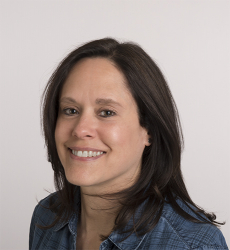
Before Lucy Vance Seligson, LCSW, became a dementia care specialist, she was a professional performer.
She studied vocal performance in college, spent her 20s working as a musician and actor, and performed in Miss Saigon on Broadway. When that chapter of her career ended in February 2001, Seligson was already thinking about what would come next.
“I had had a counselor that was very important to me in my early 20s; I wanted to emulate her and her positive impact on others’ lives, and I had had a long-running plan to go to graduate school for social work as my exit plan from the arts,” Seligson said.
That September, she started graduate school, earned her Master of Social Work from Hunter College, and eventually found her way into elder care.
There, she began noticing a pattern that would shape her career: People living with dementia were often misunderstood.
“They were blamed for things it seemed to me they could not help,” Seligson said.
She began researching dementia care and helped implement a dementia education program for staff, improving residents’ quality of life and transforming how staff understood their behavior.
“Just the concept that ‘behavior is how people with dementia communicate their needs’ is a huge paradigm shift, especially for the staff,” she said.
Today, Seligson is a dementia care specialist with Harmony Village at CareOne in New Jersey, where she works with residents, families, nurses, and other staff to provide individualized dementia care.
Looking Beyond the Behavior
For Seligson, caring for someone living with dementia begins with understanding the person rather than trying to correct the behavior.
“Well, first of all, the heart of my job, as I see it, is advocacy,” she said. “Advocating for persons living with dementia because they communicate their needs in a way that most people do not understand, through their behavior.”
Her job has three primary components: assessing residents and learning their histories and preferences, supporting families, and educating staff.
CareOne uses dementia educator Teepa Snow’s GEMS States model to assess residents’ stage of dementia. Seligson also learns each resident’s life story, likes, dislikes, and potential triggers, information that helps shape an individualized care plan.
Families are another important part of her work. She checks in with them, provides education, and helps them cope with the challenges of loving someone living with dementia.
“Sometimes they need to be given permission to step away and care for themselves without guilt,” she said.
Staff receive an initial full-day dementia class followed by monthly in-services, with education tailored to their roles. For nurses, Seligson said their close contact with residents gives them a particularly valuable perspective.
“The nursing team knows things that no one else does, because they help residents with the most intimate tasks possible- bathing, toileting, eating, sleeping, changing clothes,” Seligson said.
That proximity can help nurses recognize changes in cognition, physical function, and behavior before others do.
“One very important area that the nursing team usually notices before anyone else is a change in status of a person, either cognitively or physically, which is crucial so that the care plan can be adjusted to meet changing needs and ensure the person’s quality of life,” she said.
A Day Built Around Observation
Seligson typically begins her workday by checking in with the director of wellness, or director of nursing, to learn about any changes involving residents, families, or staff.
“If I can troubleshoot issues with residents, families, or staff, and keep those issues off of the DOW’s plate, it is my goal to do so before they even hear about it,” she said.
From there, she walks through the memory care neighborhood, greeting residents and checking in with staff. She reviews the electronic medical record for medical changes or new documentation and participates in a morning meeting with department heads.
Some of her most valuable assessment time, however, happens away from a desk.
Seligson tries to be present during meals because watching a resident eat can reveal changes that might otherwise be missed.
“Observing residents at mealtime can be a prime way to discover if someone’s dementia has progressed, and to demonstrate and teach changes that can be implemented in their care to make their life better,” she said.
A resident who previously used utensils independently, for example, may begin having difficulty using a fork. Instead of simply taking over the task, the care team can make adaptations, such as offering finger foods, that allow the resident to maintain as much independence as possible.
“We want to give needed support, but if we give too much support, we take away their agency and independence,” Seligson said.
She also helps serve meals, allowing her to interact with residents, work alongside staff, and model approaches to dementia care.
Her day may also include family meetings, formal care plan discussions, time spent alongside recreation and activities staff, resident reassessments, and documentation of behavioral concerns, interventions and family communication.
When a Resident Is Having a Difficult Moment
When a resident becomes anxious, confused, agitated, or resistant to care, Seligson first pays attention to how the person is being approached.
She said staff should approach from the front, establish visual attention before getting too close, speak slowly, and allow additional time for the person to process what is being said.
If the resident is distressed, Seligson looks for a possible unmet need.
“Do they have a need that is unmet? Are they hungry, thirsty, in pain, bored, tired, overstimulated, etc.,” she said.
The surrounding environment matters, too. Noise, movement, clutter, and other sensory input can contribute to anxiety, and sometimes moving to a calmer environment can help.
Seligson also cautions caregivers against trying to win an argument with someone experiencing dementia.
“I teach my teams- do not EVER argue, correct, or use reasoning or logic to try to de-escalate the person’s upset, because these approaches will only upset them MORE!” she said.
Instead, she focuses on empathy and emotional validation. If there is an identifiable need, the team can address it. If the source of distress is less clear, caregivers can offer emotional support and redirect the resident toward something personally meaningful.
That is where knowing the individual becomes essential. A resident’s family, profession, hometown, favorite music, and other life details can become tools for connection.
Dementia Care Is Team Care
Seligson’s social work training emphasized the person in their environment, the strengths perspective, and systems thinking, concepts she continues to apply in dementia care.
“I would say 75% of dementia related behavioral issues can be solved…not by changing the person with dementia, but by altering the environment,” she said.
That environment includes not only a resident’s physical surroundings, but also the people around them and how they interact with them.
Seligson also focuses on what residents can still do rather than only what dementia has taken away.
“If we can keep a person with dementia engaged in things they are still able to do, they are experiencing higher quality of life and fewer behavioral expressions of needs,” she said.
Doing that effectively requires collaboration among nursing, social work, recreation, dietary, environmental services, leadership and other members of the care team.
It can also require helping families understand when a resident’s needs have changed.
Seligson recalled working with the family of a resident who needed to move from a traditional assisted living setting into memory care. Such transitions can be difficult because family members may be grieving changes in personality, capacity, and family roles while their loved one is still physically present.
Her social work background helps her support families as they process those transitions.
“Slowly the family will evolve from feeling that moving their loved one into another level of care is a horrible admission of loss, and they move towards realizing that for a person living with dementia, what that person has is the here and now, this moment,” she said.
What Nurses Interested in Dementia Care Should Know
For nurses and other healthcare professionals considering dementia care, Seligson believes clinical knowledge is important, including understanding the brain and the functions affected by dementia.
But knowledge alone is not enough.
“You have to WANT to do it, you have to be viscerally drawn to it,” she said.
CareOne’s dementia specialists come from nursing, social work, physical therapy, occupational therapy, and speech therapy backgrounds, she said. The work requires listening, empathy, and a willingness to reconsider assumptions about residents and their care.
“Valuable experience includes anything that makes one humble enough to admit when you’re wrong and leave your ego at the door and just exist to support others!!” Seligson said.
For nurses, that can mean recognizing that a resident who appears resistant, agitated, or difficult may be communicating a need rather than simply acting out.
Sometimes the clue emerges during an ordinary part of the nursing day: a meal that suddenly becomes harder to eat, a familiar task that takes longer, an unexplained change in mood, or a resident who seems different.
Those observations can shift the question from what a resident is doing to what that resident may be trying to communicate.
Interested in a career in dementia care? Deepen your understanding of dementia caregiving and evidence-based interventions with Springer Publishing’s Handbook on Dementia Caregiving: Evidence-Based Interventions for Family Caregivers.
- She Went From Broadway to Dementia Care. Now She Helps Nurses Understand What Behavior Is Saying - September 25, 2026
- What Causes Breast Milk Supply to Drop? What Nurses Should Know - August 18, 2026
- National Breastfeeding Month: How Nurses Can Help Families Make Informed Feeding Decisions - August 6, 2026