

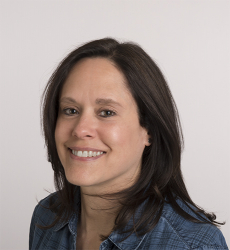
Before Princess Minter, DNP, APRN, PMHNP-BC, CARN-AP, admits a patient from the virtual waiting room, she is already looking for clues.
She reviews the patient’s most recent urine drug screen, prescribed medications, prescription drug monitoring program information, previous note, and treatment plan. By the time the patient’s face appears on her screen, Minter wants her attention focused on the person, not the chart.
“That preparation is important because when the patient appears on my screen, I want to be able to listen rather than spend the visit reconstructing what happened since our last appointment,” Minter said.
As a psychiatric mental health nurse practitioner specializing in substance use disorder treatment, Minter cares for adults with opioid and alcohol use disorders, including patients with co-occurring psychiatric conditions. Much of that care happens through telehealth.
Her clinical days typically run from 8 a.m. to 5 p.m., with approximately 24 to 27 patients during a full day. Follow-up visits generally last about 20 minutes, while new evaluations take longer. Depending on a patient’s clinical needs and stage of recovery, appointments may occur weekly, every two weeks or, for a smaller number of stable patients, monthly.
“Although the pace can be busy, I try not to allow the volume of the day to make an individual patient feel reduced to a prescription,” she said. “Medication management is part of my role, but so are assessment, education, listening, safety planning and maintaining the therapeutic relationship.”
Learning to Assess Patients Through a Screen
Telehealth changes the environment in which Minter practices, but it does not eliminate the clinical information available to her. Some of her patients are employed and meet with her during lunch breaks, allowing them to remain engaged in treatment while managing work and other responsibilities.
During visits, Minter assesses substance use and cravings, medication effectiveness and side effects, mental health symptoms, safety concerns, and progress toward treatment goals. When appropriate and time allows, she also incorporates supportive psychotherapeutic interventions.
“One advantage of seeing patients regularly is that I get to know their baselines,” Minter said. “In telehealth, I pay very close attention to changes in patterns.”
She watches appearance, hygiene, behavior, facial expressions, speech, mood, and engagement. A change from a patient’s usual presentation can prompt further assessment.
“If someone who consistently arrives well-groomed suddenly appears noticeably unkempt, I want to understand what changed,” she said. “It could involve substance use, but it could also reflect depression, significant stress, instability at home, or another concern.”
A normally talkative patient who suddenly becomes quiet, or a typically reserved patient who becomes unusually talkative or activated, may also warrant a closer look.
Rather than assuming the cause, Minter assesses substance use, suicidal or self-harm thoughts, possible intoxication or withdrawal, overdose risk, and other psychiatric or medical safety concerns. She also considers whether the patient can continue to be safely managed at the current level of care.
Depending on what she finds, Minter may request an unexpected urine drug screen, increase individual or group therapy, recommend additional recovery supports or arrange a higher level of care.
“The goal is not to catch someone in a mistake; it is to recognize changes early enough that we can respond appropriately and protect their safety,” she said.
From Medical-Surgical Nursing to Addiction Treatment
Minter’s approach is grounded partly in the seven years she spent in medical-surgical nursing before moving into inpatient psychiatry and eventually becoming a psychiatric mental health nurse practitioner.
She credits that experience with strengthening her assessment skills and preparing her to manage medically complex patients and emergencies.
“That experience continues to shape the provider I am today because physical and mental health so often go hand in hand,” she said.
Her interest in mental health began much earlier. Growing up in New York, Minter remembers seeing people experiencing homelessness who appeared to be responding to people others could not see or hear. At the time, she assumed what she was witnessing was connected to substance use. She later came to understand the complexities of serious mental illness.
A psychiatric clinical rotation during nursing school confirmed her interest in the field. After developing the medical foundation she wanted, Minter transitioned to inpatient psychiatry and pursued her psychiatric mental health nurse practitioner education.
Her decision to focus on substance use disorder treatment was also informed by seeing the effects of substance use within families and close relationships.
“Before I understood addiction as I do now, I remember wondering, ‘Why can’t I help them stop?’” she said.
Education and clinical experience changed her understanding.
“Substance use disorder is far more complex than simply deciding to stop using,” Minter said.
Meeting Patients Where They Are
Patients come to Minter at different stages of recovery, and her approach starts with understanding where they are rather than imposing expectations about where they should be.
With new patients, she may intentionally begin the conversation with something unrelated to substance use, such as their children, a pet, or a sports team on their shirt. The goal is to establish rapport before moving into more difficult territory.
Then she often asks a simple question: “Why now?”
For someone who has used substances for years or previously attempted treatment, the answer can reveal what changed and what is motivating the latest attempt at recovery.
“That question often leads to the most vulnerable part of the conversation and helps me understand what matters to them,” Minter said.
When a patient continues to struggle with substance use, maintaining engagement becomes a priority.
“I want them to know, ‘I’m happy to see you, and I’m expecting to see you again next week,’” she said.
For patients who have been stable in recovery for months or longer, visits may shift toward coping skills, self-care, relationships, stressors, and sustaining recovery. At the same time, substance use and treatment continue to be monitored.
Co-occurring psychiatric conditions add another layer. Changes in depression, anxiety, trauma-related symptoms, or other psychiatric concerns can affect recovery, just as substance use can affect psychiatric symptoms. Treatment may involve medication changes, additional therapy, stronger recovery supports, or coordination with another mental health provider.
“The treatment plan may change, but the underlying approach remains the same: understand where the person is, determine what they need now, protect their safety and keep them connected to care,” Minter said.
Medication Is Treatment
Buprenorphine plays a significant role in Minter’s care of patients with opioid use disorder. The FDA-approved medication can reduce opioid cravings and withdrawal symptoms and help patients achieve the stability needed to engage more fully in treatment and recovery.
Minter wants nurses and other healthcare professionals to understand a distinction she still sees blurred in conversations about addiction treatment.
“One thing I wish more nurses and healthcare professionals understood is that medication for opioid use disorder is treatment, not a reward,” she said. “A patient does not have to prove that they deserve evidence-based treatment.”
She still encounters the belief that taking medications such as buprenorphine or Suboxone amounts to “replacing one drug with another” or “trading one addiction for another.”
“That misunderstands both medication and addiction,” Minter said. “Physical dependence can occur with many prescribed medications and is not the same as addiction. A patient taking buprenorphine as prescribed for opioid use disorder is receiving treatment for a diagnosed condition.”
For nurses, Minter said language and attitudes can influence whether patients remain engaged in care.
“Recovery does not have to mean being medication-free,” she said. “For some patients, medication is one of the tools that makes sustained recovery possible.”
Adapting to a Changing Drug Supply
As the substances patients encounter change, Minter’s assessments have had to evolve with them.
Polysubstance use is common in her practice, and patients do not always know everything they have been exposed to. Someone may report knowingly using one substance while a urine drug screen indicates exposure to others. Counterfeit pills are another concern because a product obtained as a familiar prescription medication may not contain what the patient believes it does.
Minter is also asking more questions about products available through smoke shops, convenience stores, and online, including kratom and concentrated 7-hydroxymitragynine, or 7-OH, products.
“Some patients perceive products sold legally or over the counter as inherently safer,” she said. “Accessibility does not necessarily mean a product is safe, non-addictive, or without significant risk.”
Instead of asking only what drugs a patient has used, Minter asks what the patient knowingly used and compares that history with the objective information available. She also specifically asks about products purchased from smoke shops, convenience stores, and online because patients may not think to include them when asked about drug use.
“We cannot limit our assessments to the substances we traditionally learned about in school,” she said. “Clinicians have to remain curious, stay educated about emerging substances, and continue adapting the questions we ask.”
When the Diagnosis Becomes a Label
For Minter, treating substance use disorder also means confronting the stigma patients may encounter in healthcare.
She hears from patients who say they have felt judged before receiving a full assessment, particularly when seeking care for pain, anxiety, or other symptoms and being perceived as medication-seeking.
“Having a substance use disorder does not mean someone cannot also experience legitimate pain, anxiety, ADHD, depression or another medical or psychiatric condition,” Minter said.
Her message to nurses is straightforward: “The diagnosis should inform our assessment; it should not replace it.”
Because nurses often spend significant time with patients, Minter believes they can influence whether a healthcare encounter reinforces stigma or helps dismantle it.
“Listen first. Ask questions. Be curious rather than judgmental,” she said.
At the end of an initial assessment, Minter tells patients some version of: “It was a pleasure meeting you, and I look forward to supporting you as safely and as well as I can while you are with us.”
“Sometimes reducing stigma begins with something that simple: making sure the person sitting across from you knows you’re glad they came,” she said.
Keeping the Door Open
When a patient returns to substance use, Minter’s first concern is safety. She assesses what happened, current substance use, overdose or withdrawal risk, psychiatric and medical concerns, and whether the patient’s current level of care remains appropriate.
But she also works to protect the therapeutic relationship.
“Recurrence of use tells me something needs attention; it does not tell me that the patient is undeserving of treatment,” Minter said. “I want patients to come back and tell me what happened rather than avoid treatment because they are afraid of disappointing me or being judged.”
One patient has stayed with her. She met him several years ago, early in her time with the practice. He had been in and out of treatment multiple times, and their early work together was rocky. He returned to substance use more than once and left treatment at times. Eventually, he came back.
“Each time, we welcomed him back,” Minter said. “We reassessed where he was, addressed what needed to change, and continued treatment without shaming him for what had happened.”
Today, she said, he has maintained his recovery, continued his education, and built greater stability in his personal life.
“That experience reminds me of what can happen when we don’t give up on someone simply because their recovery isn’t linear,” Minter said. “Sometimes our job is to hold the door open long enough for a person to become ready to walk through it again.”
What Nurses Considering Addiction Care Should Know
For nurses and nursing students considering psychiatric mental health or substance use disorder treatment, Minter recommends first understanding why they want to enter the field.
“The first thing I would probably ask is, ‘What makes you think you want to do this work?’” she said. “I would like to know what motivates them because, in this field, your motivation matters.”
She recommends developing strong psychiatric and medical assessment skills and learning about substance use disorders, withdrawal, overdose prevention, medications for opioid use disorder, harm reduction, co-occurring psychiatric conditions, and trauma-informed care. Clinical experience with people who have substance use disorders and learning from experienced clinicians can also help prepare nurses for the work.
Equally important, she said, is examining personal assumptions about addiction.
“You can know the pharmacology and still cause harm if the person sitting across from you feels judged.”
The field can be difficult, frustrating, and emotionally demanding. Progress can be slow, and patients may struggle again after months of stability.
“The work is tough, but nurses are tough too, so that makes it a fair fight,” Minter said.
Despite the difficult days, Minter remains grateful for the work.
“There are many days when I am technically at work, but it doesn’t feel like ‘work’ in the traditional sense because I know why I am there, and the work is meaningful to me,” she said.
Her advice to nurses considering the specialty comes back to the same principle that guides her own practice.
“If this is your field, you will know why you chose it. Hold onto that reason.”
Ready to Take the Next Step Toward PMHNP Certification?
If you’re preparing to become a psychiatric mental health nurse practitioner, Springer Publishing’s PMHNP Certification On-Demand Video Review Course provides focused exam preparation with digital access through ExamPrepConnect.
- She Treats Addiction Through a Screen. Here’s What This Psychiatric NP Is Watching For - September 30, 2026
- She Went From Broadway to Dementia Care. Now She Helps Nurses Understand What Behavior Is Saying - September 25, 2026
- What Causes Breast Milk Supply to Drop? What Nurses Should Know - August 18, 2026