
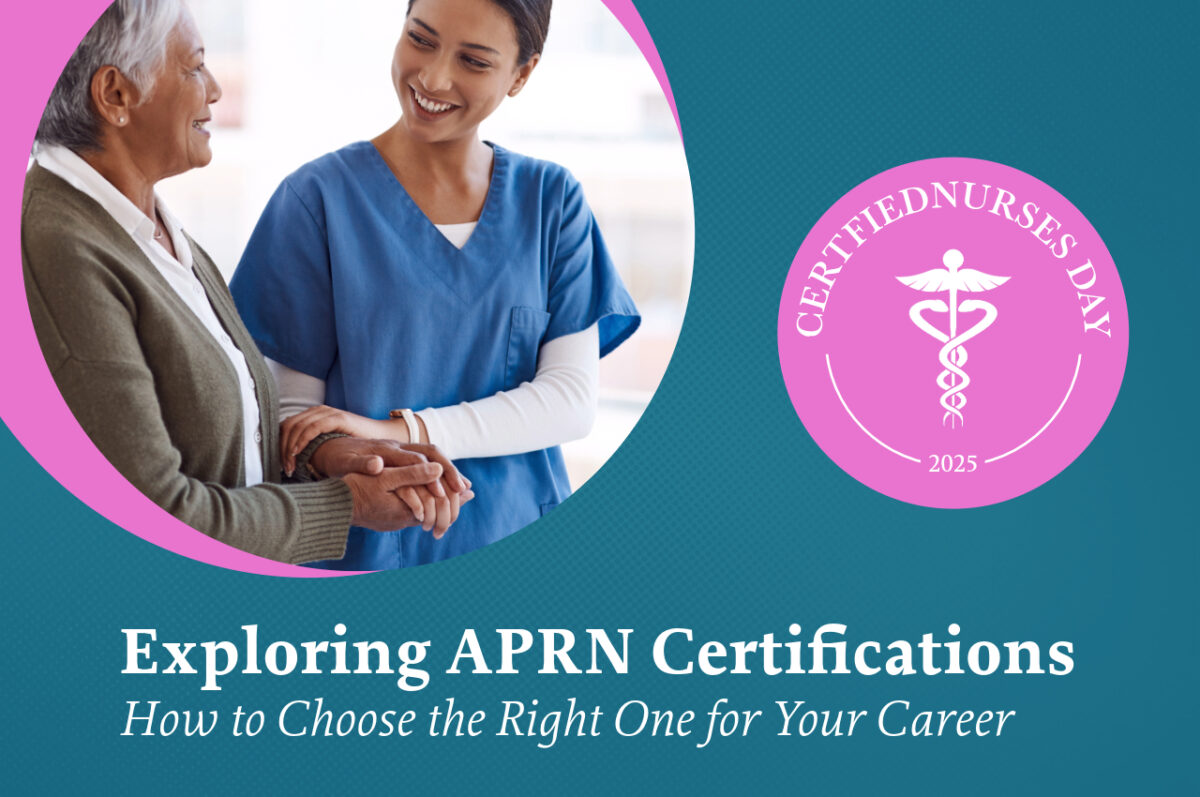
Advanced Practice Registered Nurses (APRNs) include nurse practitioners, nurse anesthetists, clinical nurse specialists, and nurse midwives. These four APRN certifications substantially impact healthcare, as they provide high-quality care and help meet the needs of the growing and aging population.
Read below to discover the various types of APRN certifications. I have included guidance on selecting the right certification for your career goals and interests.
Types of APRN Certifications
There are different types of APRN certifications for you to choose from. Below, I will briefly discuss the certifications specific to the nursing specialty selected.
Nurse Practitioner (NP) Certifications
NPs provide healthcare in primary, acute, and specialty care settings. Their role is often to assess, diagnose, and treat patients with a wide range of health conditions.
Family Nurse Practitioner (FNP)
FNPs provide care to patients across the lifespan. Their role includes managing acute and chronic health problems, emphasizing wellness and preventative medicine. The FNP primarily works in a clinical setting.
Acute Care Nurse Practitioner (ACNP)
ACNPs provide care to adult patients in the hospital or acute care setting. These patients range in acuity, and the ACNP often works alongside a team of healthcare providers to ensure they receive the care they need.
Pediatric Nurse Practitioner (PNP)
PNPs provide care to children from newborns through early adulthood. They manage acute and chronic health problems and perform wellness exams. They primarily work in clinics but may also be found in the hospital or acute care setting.
Adult-Gerontology Nurse Practitioner (AGNP)
AGNPs deliver care to the adult and older adult population by managing acute and chronic health problems. They may work in the clinic, long-term care, or acute care/hospital settings.
Psychiatric Mental Health Nurse Practitioner (PMHNP)
PMHNPs provide psychiatric and mental health care to patients across the lifespan. You may find them working in the clinic setting and the hospital, and it is a specialty that is more likely to provide telehealth services.
Women’s Health Nurse Practitioner (WHNP)
WHNPs provide healthcare to women, from adolescents to older adults. This includes wellness exams, pre- and postnatal care, contraception management, and preventative health. They primarily work in the clinic but may also work in the hospital.
Clinical Nurse Specialist (CNS) Certifications
A CNS is a healthcare provider who can assess, diagnose, and treat patients, including the ability to prescribe medications. Their education also prepares them for leadership roles, whether that be manager of a clinic or part of hospital administration. CNSs typically work in hospital and clinic settings.
Adult Health Clinical Nurse Specialist
An Adult Health CNS provides care to adult patients with acute and chronic conditions, including primary or preventative care. They primarily work in a clinic or nursing home.
Pediatric Clinical Nurse Specialist
Pediatric CNSs care for pediatric patients from newborns to early adolescence. They aid in the management of acute and chronic health problems. A pediatric CNS primarily works in a clinic, outpatient clinic, or hospital.
Neonatal Clinical Nurse Specialist
A neonatal CNS cares for the neonate, including patients in the neonatal intensive care unit (NICU). They primarily work in the hospital setting.
Nurse Anesthetist Certifications
Certified Registered Nurse Anesthetist (CRNA)
CRNAs deliver anesthesia and pain-relieving medication before, during, and after procedures, including epidurals during labor and joint blocks for orthopedic surgeries. They primarily work in hospitals and surgery centers.
Nurse Midwife Certifications
Certified Nurse Midwife (CNM)
CNMs provide care during pregnancy, delivery, and postpartum. They also provide primary care to adolescent women and older adults. They work in birth centers, hospitals, and clinics.
How to Choose the Right APRN Certification for You
How do you choose the right APRN certification for you? First, reflect on your nursing experience, skills, and knowledge gained in your current career. Once you have done that, here are some questions to help you further determine which APRN certification is best for you.
- What are your own career goals and interests?
- What population do you want to work with?
- What practice setting interests you?
Other points to consider when choosing the APRN certification include your desired work schedule. Do you want to work days or nights? Are you willing to be on-call? How many hours a day do you want to work? Consider the job market and the need for the various APRN certifications.
Depending on your APRN specialty, there may be multiple certifying bodies, each with its board certification exam. For example, if you wish to become an FNP, you can be certified through the AANP or ANCC. Review the exam blueprint in these situations and determine which best fits your knowledge set.
Popular APRN Certifications and Their Career Benefits
Important points to consider when choosing an APRN certification include clinical interests, experience, and schedule; however, there are other points to consider. Below, I will outline a few benefits and opportunities related to each APRN specialty.
Nurse Practitioners (NPs)
NPs are in demand and offer a diverse range of practice specialties and settings, including private practice, clinics, hospitals, and telemedicine. The NP’s scope of practice varies from state to state; however, an increasing number of states are granting NPs greater autonomy and the ability to practice independently.
Nurse Anesthetists (CRNAs)
CRNAs have specialized skills in administering anesthesia and pain management before, during, and after procedures. This APRN certification is linked to high earning potential, and CRNAs typically work in surgery centers, outpatient settings, and hospitals.
Nurse Midwives (CNMs)
CNMs are highly satisfied with their jobs and patients and have a lot of autonomy, especially in delivering maternal care. They primarily work in birth centers but may also work in private practice and hospitals.
Clinical Nurse Specialists (CNSs)
Depending on their certification, CNSs can diagnose and treat patients across the lifespan. They are also often found in leadership roles and excel due to their education and expertise in a specialized practice area. Besides hospital leadership, you may find them in patient care management and educator roles.
Choosing the right APRN certification is essential to ensure it brings personal and professional satisfaction. To achieve this, research the different APRN certifications and see how they align with your passions and personal and professional goals. Once you have selected the APRN certification you wish to pursue, put the time into it and enjoy your new nursing career!

- How Nurse Educators Can Build More Engaging Online Courses - May 19, 2026
- 5 Tips for Nurse Educators to Improve Student Learning - May 5, 2026
- How to Become a PMHNP: Responsibilities, Skills, and Career Steps - April 7, 2026