
This April, in honor of Autism Acceptance Month, we celebrate the incredible contributions of autistic nurses who bring compassion, dedication, and unique perspectives to the world of healthcare.
According to the CDC, around 2% of adults in the U.S. are autisticand that number is growing as more people receive diagnoses later in life. With greater awareness comes greater acceptance, and more autistic adults are finding strength and clarity in understanding who they are.
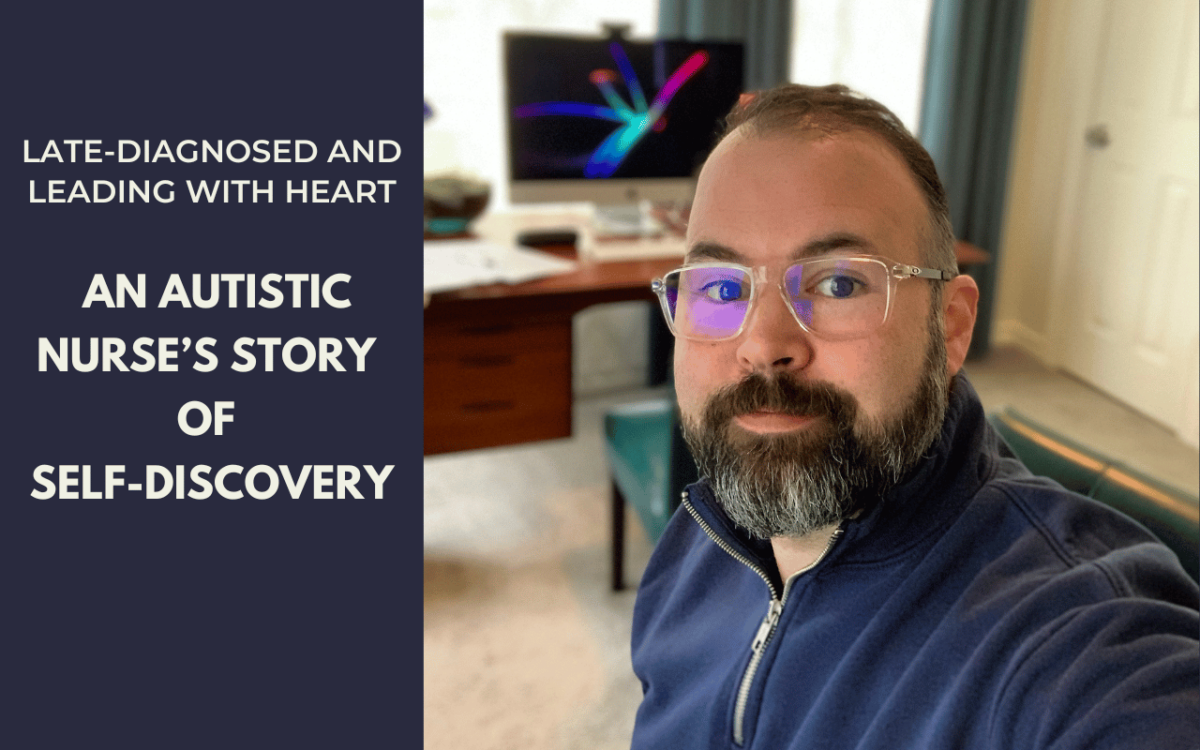
Autistic individuals are making meaningful impacts in all kinds of careers, including nursing. Brandon Cagle, RN, NP, CBDCE, opens up about his journey as a late-diagnosed autistic adult and how that experience has shaped his path in the nursing field. His story is a powerful reminder that neurodiversity enriches our communities in countless ways.
1. What is your current occupation, and where do you work?
I am a Registered Nurse, Nurse Practitioner, and Certified Diabetes Care and Education Specialist from Texas. I decided to have a little adventure and work abroad as a nurse in another country, so I got my nursing license, which is the equivalent of a nurse practitioner license in Sweden. I am working abroad as a diabetes nurse in an endocrine clinic in Malmö, Sweden, and my focus is treating foot problems of people who have diabetes.
2. When were you diagnosed with autism?
I had many signs and symptoms of autism all my life, but my family, teachers, and I could not put words to it in those days. My symptoms continued to worsen severely after I began to work in the healthcare sector until my physician referred me to a special clinic to be checked out for ADHD and Autism Spectrum Disorder. I was diagnosed with Autism Spectrum Disorder Level 1 and PTSD during this time at the age of 37. My current age is 43.
3. What is one thing you love about working as a nurse? What drew you to the field?
I love when people feel better because of the work I do. It is so nice when they come back to visit and are healthier than when they first came to me. I have always been interested in the history of medicine. My grandmother worked in a health food store for years and treated a lot of our ailments with natural remedies. I soon learned that a lot of modern medicine came from nature. CareFlight, a team of nurses who work on a helicopter, came to my university. I decided I wanted to be a flight nurse when I saw that. I have not worked as a flight nurse but have worked many years in intensive care in Texas and Alaska and with CareFlight, receiving patients from them.
4. How has your autism affected your work as a nurse?
In the beginning, it was super hard as I was not diagnosed with autism and really struggled a lot. I had difficulty dealing with certain cultural problems in the nursing field, such as bullying. Being a nurse was stressful, especially in the first two years. I had ticks and stimming and did not know it was related to a diagnosis. When I would get stressed, they would worsen. Some nurses picked on me for it and told me it would scare the patients. Interestingly, I never had complaints from the patients; they usually asked me to take care of them the next shift.
The learning curve was huge when I got my first job as a nurse in the Neuro ICU. After I finished my three shifts, I would come home and crash on the couch. It was really tough in the beginning. However, with time, I have gotten much better at navigating the nursing world, and having my diagnosis has really helped me to understand myself and others better. I think having autism has its perks as well and gives me special abilities that are useful in the nursing world.
5. What are some ways your autism has given you strengths in nursing?
I have hyperfocus. If I am really interested in something, I put all my energy into it. This has led to me being a subject matter expert in various departments in which I have worked. I love teaching, and my preceptees usually comment on how grateful they are for my pedagogical teaching style. Knowing how hard it was for me as a neurodivergent nurse, I want others to have a better learning experience and feel safe.
One of my hyperfocuses is people and how we interact with one another. This has become useful in conflict resolution within my roles. I currently share leadership roles with the team I work for and am confronted with different types of conflict. I tend to be the listener and the peacemaker.
Social interaction did not come naturally to me, which made me very interested in learning more about how to resolve such issues in the workplace. I read a lot of literature on human behavior and conflict resolution.
I am also a very “stubborn” person. I do not give up when I have my mind set on something. It has made me a fighter and a survivor. Despite my challenges, I became the first in my family to graduate from college and eventually I got my Nurse Practitioner degree.
6. What are some ways your autism has hindered your ability to work as a nurse?
I struggle with doing more than one thing at a time and handling too much information at once. I also need to know how everything works down to the atomic level, which can be tiresome for those teaching me. However, it pays off in the end because I end up being, as mentioned earlier, the subject matter expert that others come to for help. Sometimes, it takes me longer to learn things than others.
7. Many people with autism have struggled with sensory overload, overworking, or other factors. Is this something you have struggled with as a nurse?
Yes! I still struggle with it every day. I am sensitive to noise, light, and texture, and I have a powerful sense of smell. These are both my superpowers and kryptonite. I tend to overwork, which I have only recently come to terms with. I am making great strides in learning to take time for myself for rest and recovery, but I have a long way to go. I tend to be a perfectionist, and my hyperfocus makes it hard to take breaks.
8. What is one helpful piece of advice can you give to other autistic nurses who are currently struggling to make it in the nursing field?
Be honest with those who need to know about your certain needs that should be accommodated because of a diagnosis. My experience is that many times, letting people know ahead of time, such as your manager or preceptor, before you start working closely with them will get you better support and understanding.
There will always be people who are not supportive and do not understand, but for the most part, I find it helpful to be specific about your needs to thrive in the workplace. Examples can be, “I need a little more processing time to process what you are saying. Can we go at this one step at a time?” or “I need to understand why we are doing this this way,” etc. However, remember to be patient and kind with others and yourself.

- How Nurses Can Handle Bad Days at Work and Bounce Back Stronger - December 29, 2025
- How to Recognize When You Need to Take a Break - December 24, 2025
- Back by Popular Demand: How to Deal with Feelings of Inadequacy as a New Nurse - December 5, 2025