
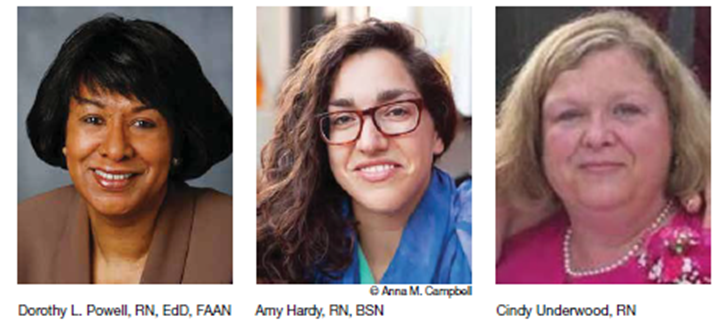
Although we may not have personal experience with homelessness, as nurses we can easily imagine the way in which life might unravela collapsing economy, long-term unemployment, a series of missed mortgage paymentsleading to a life on the street, in a car, or at a shelter. Nurses are privileged to be in a position to help people get back on their feet and take the necessary steps toward a more secure future. As we enter our fifth year since the start of the Great Recession, here are what three exemplary nurses have to say about caring for one of our most vulnerable populations.
Nurse Pioneers Homeless Care Programs
Dorothy L. Powell, RN, EdD, FAAN, Associate Dean of the Office of Global and Community Health Initiatives in the School of Nursing at Duke University
Dr. Dorothy Powell first became involved with caring for the homeless in Washington, DC, in the early 80’s at leading advocate Mitch Snyder’s shelter, which was then the largest in the United States. Soon after, she led the development of a health care unit at the 2nd & D Street Shelter, another large facility. Nurses provided respite care 24/7/12, and we collaborated with persons in the homeless community, she says.
Powell empowered homeless individuals through a nationally lauded program, Nursing Careers for Homeless People, in the early 1990’s. We identified homeless people who would benefit from being nursing assistants, and we prepared them to work along with other staff people, she says.
Participants set an ambitious goal: Prepare for a better job so as to move from a shelter to transitional housing. Nearly 90 individuals achieved that target.
We had many success stories. Over 75% finished the three-month Pre-Admissions Readiness Program, passed the nursing assistant exam, and got jobs. A third went on to more education at the collegiate level, usually in nursing. Some became RNs, some finished at the top of their nursing classone even went into a master’s program, she adds.
At Duke University, she developed a community service program called Raising Health, Raising Hope. The message is that despite your vulnerability and homelessness, if the status of one’s health can be improved, it can give hope to move forward with other aspects of their lives, explains Powell.
Powell has also gone beyond her community of Durham, North Carolina, and is now working globally to address health disparities.
Nurse’s Mission Changes Lives in Birmingham
Cindy Underwood, RN, operating room nurse at St. Vincent’s East and founder of Changed Lives Medical Clinic
Cindy Underwood, along with a few colleagues from St. Vincent’s East, has provided medical care to the homeless people of Birmingham, Alabama, for a dozen years at a monthly outdoor clinic.
I realized that I can’t care for the homeless or indigent in the same way as the insured, she says. I have to think and work outside the normal box. Health care resources that are usually taken for grantedequipment, lab work, and sanitationare absent. You may want to get a urinalysis, but you’re in an area where they can’t go to the bathroom, she adds.
Underwood also learns about each patient’s living situation. You can’t assume they’re going home to a house with electricitymaybe they don’t have running water. If a homeless patient is suffering from pneumonia and it’s winter, you may have to find a shelter, she adds.
The clinic runs every fourth Tuesday night from 6-8 p.m. under a viaduct downtown. We see 100 to 125 people each month, and for 85%, we’re their primary care providers. We are their doctors and their pharmacists. The clinic also provides free over-the-counter medications, or a month’s supply of prescription drugs, with refills available at return visits.
Underwood works a full-time job and cares for a family, in addition to running the monthly clinic. Why does she do it? It’s a faith thing. I’m a Christian and God truly told me you could do so much more for them, she explains. It started with bringing Band-Aids in the back of my station wagon. Then it grew into a clinic. Even if it is just Tylenol or multivitamins, they’re so excited, it makes it worth it.
Many patients are regulars with chronic or complex conditions. We take the pressure off hospital emergency rooms, she says. Common health conditions are high blood pressure, high blood sugar, athlete’s foot, and respiratory conditions, which are exacerbated by living on the streets or in abandoned buildings.
Sometimes, a trip to the ER can’t be avoided. One homeless lady came to the clinic at night during a bad winter. She had frostbite on her toes, and we saw her to the hospital. The doctor said she would have lost toes if she had not come in for treatment, she recalls.
Don’t be afraid to step outside of the doctor’s office or hospital to where people desperately need help, advises Underwood. Don’t worry about losing your license; it’s a charitable act, she says. If you do it with a pure heart, there’s not any case where a judge has ruled against it.
If you would like to start a similar clinic in your community, email Cindy Underwood at [email protected].

- Resumes, LinkedIn, and HR Portal Profiles, Oh My! - May 22, 2020
- Weight Management for Nurses: The Why’s and How’s of Losing or Maintaining Weight - February 18, 2020
- Mindfulness and Wellness Programs for Patients - October 14, 2019