
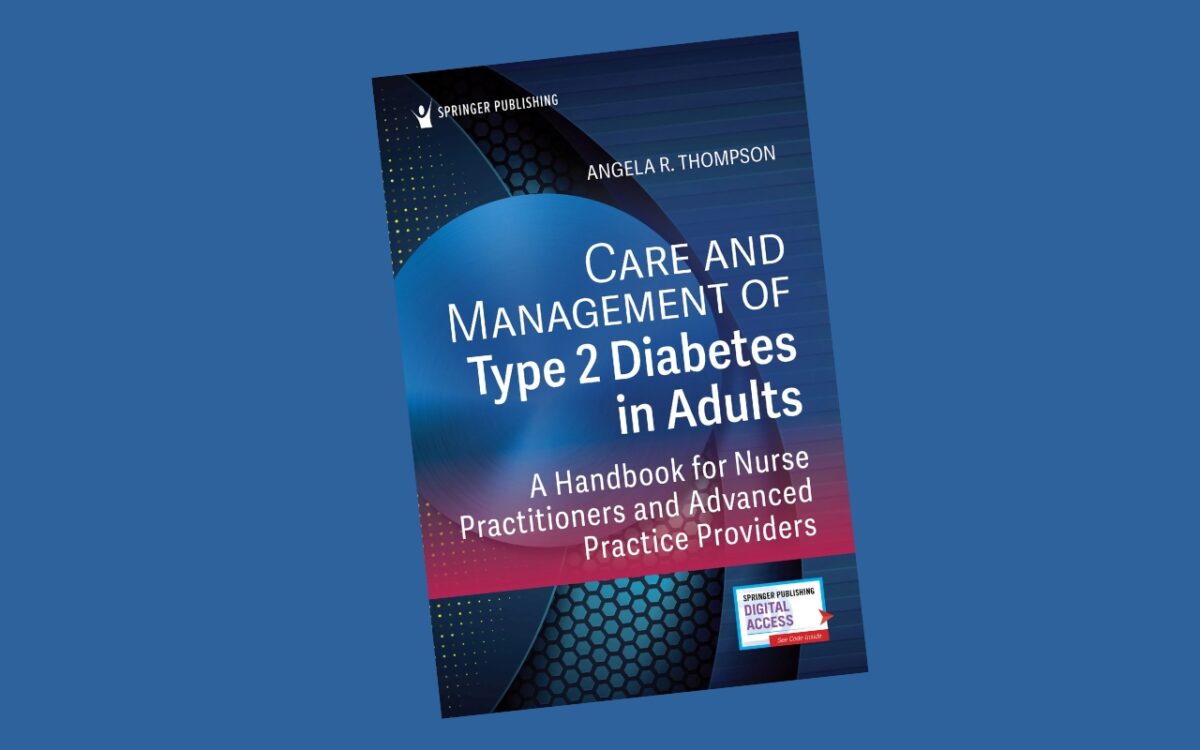
As Diabetes Awareness Month shines a spotlight on one of the most pressing health challenges facing Americans today, nurse practitioners and advanced practice providers are gaining a timely new resource designed specifically for their needs. A new book by Angela Thompson, DNP, FNP-C, BC-ADM, CDCES, FAANP, “Care and Management of Type 2 Diabetes in Adults: A Handbook for Nurse Practitioners and Advanced Practice Providers,” provides a comprehensive, practice-oriented guide that bridges the gap between clinical guidelines and real-world diabetes care.
Bridging Standards with Everyday Care
Dr. Thompson’s inspiration for the handbook came from a clear gap she witnessed between published standards of care and the realities of patient management.
“I was inspired to write this handbook because I saw a gap between published standards of care and guidelines for the treatment of Type 2 Diabetes and their real-world application,” she explained. “The aim of this handbook was to translate the recommendations into actionable and practical applications through concrete strategies, workflows, and case-based examples that support everyday decision making and patient-centered care.”
Recognizing that nurse practitioners (NPs) and advanced practice providers (APPs) are at the forefront of diabetes care, Thompson designed her book to empower them with practical, accessible tools.
“By focusing on NPs and APPs, I hope to provide tools to empower them to confidently translate standards of care into everyday decision making, improve patient outcomes, and strengthen their leadership in chronic disease management.”
Filling a Critical Resource Gap
Type 2 diabetes affects more than 11% of the U.S. population. Despite its prevalence, Thompson noted that clinicians often lack a comprehensive, practice-based reference.
Her handbook brings together essential elements of modern diabetes care, including the integration of technology such as continuous glucose monitors (CGMs) and insulin pumps, treatment considerations across the lifespan (from women’s health to geriatrics), prevention strategies, psychological care, mental health support, pharmacological advances, and sustainable lifestyle interventions.
“There is a lack of practical, comprehensive resources for NPs and APPs to manage type 2 diabetes across the lifespan,” Thompson said. “All of these elements are integrated into a single practice-oriented handbook.”
The Expanding Role of NPs in Diabetes Care
Over the past five decades, nurse practitioners have evolved from addressing primary care shortages to playing a critical role in specialty care, including complex diabetes management.
“They are not only addressing workforce shortages but also transforming diabetes care to be more accessible, personalized, and responsive,” Thompson noted.
From Guidelines to Bedside
One of the central challenges in diabetes care is translating broad clinical guidelines into individualized treatment.
“Guidelines often present ideal scenarios, but in practice, clinicians must navigate complexities such as comorbid conditions, socioeconomic factors, and patient adherence concerns,” Thompson explained.
She sees misconceptions in primary care—particularly around lifestyle management and nutrition—as another barrier. To overcome them, she encourages NPs and APPs to engage in ongoing education and networking, and to lean into evidence-based, patient-focused strategies that combine simplicity, affordability, and shared decision-making.
Technology as a Game-Changer
Thompson devotes significant attention to the role of technology in reshaping diabetes care. Real-time data from CGMs and pumps allow clinicians to move from reactive to proactive care, leading to earlier interventions and better outcomes.
Still, she acknowledges the hesitancy many providers feel.
“Adopting new technology can feel very overwhelming, especially in primary care, where resources and time are limited. The best way to integrate technology is to start simple,” she advised. “Select one new tool and get comfortable with utilizing it before introducing another.”
Centering the Patient
For Thompson, diabetes management is never only about lab values or prescriptions—it’s also about the human side of chronic illness.
“Understand that diabetes distress and depression are common conditions seen in people living with chronic illnesses like diabetes,” she said.
She encourages NPs to normalize conversations about emotional health, ask open questions about how diabetes is affecting daily life, and build care partnerships that help patients set small, achievable goals.
Looking Ahead
When asked about the future of diabetes care, Thompson sees both promise and challenge.
“The potential application of precision medicine in diabetes is particularly promising,” she said. “I am concerned about the continued socioeconomic inequality in healthcare access and that in the current climate, it may only get worse.”
Her ultimate takeaway for nurse practitioners is simple but powerful:
“Put the patient first. Commit to put the patient at the center of all care delivery.”
A Timely Contribution for Diabetes Awareness Month
As NPs and APPs continue to lead in delivering accessible, patient-centered diabetes care, Thompson’s handbook arrives as both a resource and a rallying call. By combining guideline-based evidence with practical insights, Care and Management of Type 2 Diabetes in Adults equips clinicians with the tools they need to navigate complexity, embrace innovation, and—most importantly—center care around the patient.
Learn More & Order
Angela Thompson’s Care and Management of Type 2 Diabetes in Adults: A Handbook for Nurse Practitioners and Advanced Practice Providers is now available. Equip yourself with practical strategies, case-based insights, and tools to strengthen patient-centered diabetes care. Order your copy here.

- She Treats Addiction Through a Screen. Here’s What This Psychiatric NP Is Watching For - September 30, 2026
- She Went From Broadway to Dementia Care. Now She Helps Nurses Understand What Behavior Is Saying - September 25, 2026
- What Causes Breast Milk Supply to Drop? What Nurses Should Know - August 18, 2026