
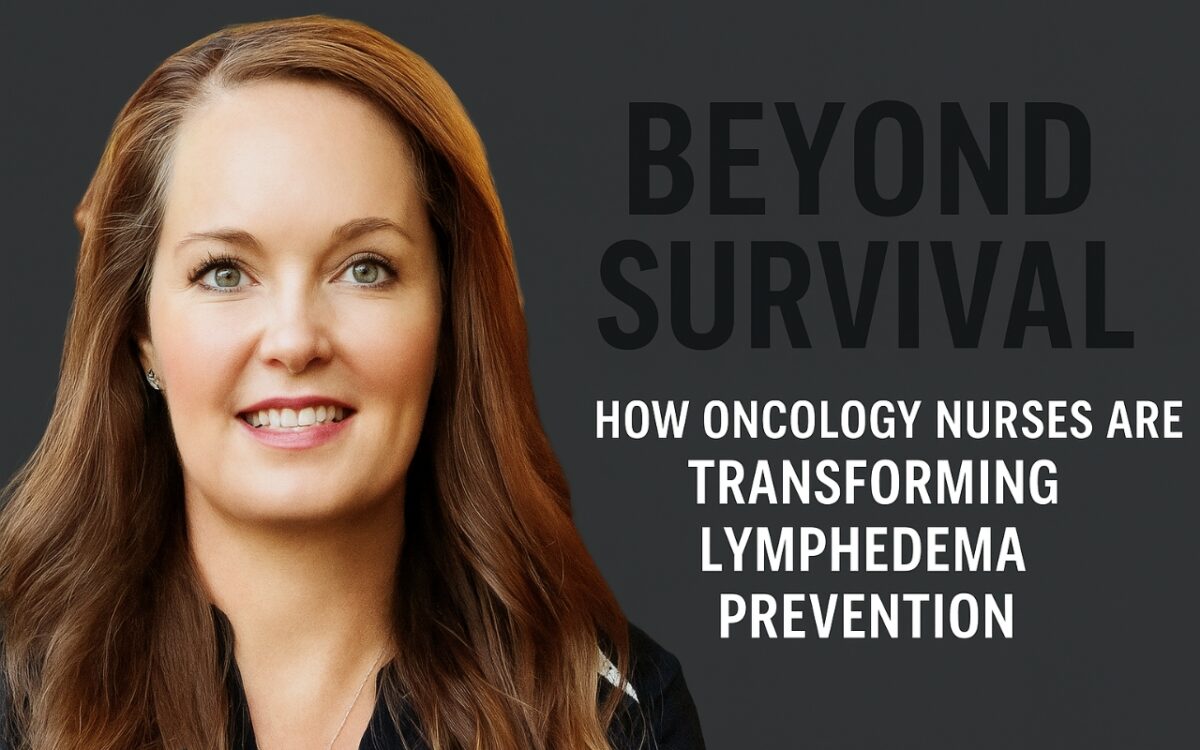
As the number of cancer survivors in the U.S. is projected to reach 22 million by 2030, oncology nurses are stepping into increasingly critical roles—not only in helping patients survive cancer but in ensuring they thrive after treatment. One of the most pressing yet often overlooked issues in survivorship is lymphedema, a chronic condition that affects up to 82% of breast cancer patients. For many, it becomes a daily reminder of a disease they thought they had left behind.
Sabrina Korentager, MSN, RN, BS, CLT-UE, a seasoned oncology nurse and advisor to ImpediMed, has made it her mission to close this gap in survivorship care. As a leader in developing the Lymphedema Prevention Program at The University of Kansas Cancer Center, Korentager is redefining how nurses—and the broader healthcare system—approach survivorship, prevention, and patient-centered care.
A Defining Moment
Korentager’s passion for lymphedema prevention was born from a patient encounter that left a lasting impression. “She was a lovely patient and, in an instant, changed everything I knew about caring for patients with cancer,” she recalls. The patient, a two-time breast cancer survivor, had developed stage 3 lymphedema. But it wasn’t the cancer that consumed her—it was the lymphedema.
“I can’t ever get past having had breast cancer because lymphedema reminds me daily that I had it… People stare, ask questions, and I have to tell my story about breast cancer all over again,” the patient told her.
That moment reframed survivorship for Korentager. “What good is surviving something so difficult if this is the lasting outcome?” she asks. “Cancer patients deserve more than just ‘surviving’ cancer.”
Lymphedema: Misunderstood and Underprioritized
Despite its prevalence, lymphedema is still not given the clinical attention it warrants. Korentager attributes this to two key reasons: the condition is primarily treated with holistic, non-pharmacological interventions like compression and manual therapy—which don’t align with Western medicine’s curative mindset—and a general lack of understanding among healthcare professionals.
“Even today, lymphedema is poorly understood. Most healthcare professionals view it as a ‘side effect’ rather than a diagnosis,” she explains. “Detected early, it is, in many cases, reversible and curable. We’ve shown this in research studies.”
Reframing lymphedema as a preventable and manageable chronic condition requires a shift in mindset from both clinicians and patients. That shift starts with early, honest conversations about individual risk and prevention strategies.
The BIS Breakthrough
One of the key tools in Korentager’s prevention model is bioimpedance spectroscopy (BIS)—a non-invasive technology that detects lymphatic changes before visible symptoms occur. It’s a cornerstone of proactive, individualized care.
“BIS has been a true turning point and game changer,” she says. “Starting before surgery or treatment provides a baseline for each patient’s normal lymphatic function. Any abnormal change can be addressed quickly and effectively.”
According to Korentager, BIS delivers on three major fronts:
1. Detecting early, reversible changes to prevent lymphedema altogether
2. Preventing progression when full reversal isn’t possible
3. Offering long-term, easy-to-use surveillance for both clinicians and patients
Research supports BIS’s effectiveness, including Korentager’s findings, which show that even when lymphedema can’t be prevented, early detection significantly reduces its severity and impact on daily life.
Patient Impact: “This Is Far Deeper Than a Swollen Extremity”
The consequences of untreated lymphedema ripple far beyond physical discomfort. “It changes how patients dress, travel, work, and recreate,” says Korentager. “This is far deeper than a swollen extremity.”
One patient, a fire captain, could no longer tolerate the heat of his work environment. Another needed extended medical leave due to recurrent cellulitis and severe swelling. Yet those involved in prevention programs early on feel empowered rather than blindsided.
“They have information, a plan, and someone to follow them,” she says. “They don’t feel afraid. They become active advocates for themselves.”
Implementation: Growing Through Resistance
Launching a prevention program wasn’t easy. Korentager faced skepticism—even from her team.
“I had already been a nurse for 15 years, but I had to humble myself and learn everything I could about lymphedema. Most of us received limited training on this.”
To gain traction, she focused on making prevention accessible and minimally disruptive to existing workflows. “I didn’t ask others to change their practice—I did all the heavy lifting. That led to marginal acceptance early on and eventually full embracement.”
The result: a replicable model that integrates seamlessly with multidisciplinary cancer care.
Why Nurses Lead This Work Best
Oncology nurses are uniquely positioned to lead lymphedema prevention programs, Korentager says, because of their patient-centered, holistic approach.
“We are trained to evaluate all the needs of the patient—not just the disease. We advocate, we educate, and we empower.”
Cancer patients juggle complex roles and responsibilities beyond treatment. Nurses understand this and help them balance their lives while navigating the challenges of survivorship.
“Prevention is proactive, patient-centered care,” she emphasizes.
Advice for Other Nurses
What’s Korentager’s advice for those looking to implement similar programs?
“Someone needs to own this and believe in it to be successful,” she says. “This isn’t just a job—it’s about knowing that early detection can truly change a patient’s life.”
Prevention can be a hard sell because it addresses a “maybe,” she admits. But the payoff is enormous—and deeply meaningful. “If you don’t believe in what you’re doing, you won’t be successful. But if you do, it’s one of the most rewarding areas of nursing.”
Expanding the Vision: Survivorship Needs Beyond Lymphedema
Korentager believes the future of oncology nursing lies in expanding support throughout the survivorship period. With more cancer patients living longer, new long-term needs—nutritional, emotional, reproductive, and beyond—are surfacing.
“Nurses can be the consistent factor across a survivor’s entire healthcare journey,” she says. “We’re in a position to innovate care in ways that truly support quality of life.”
What Fuels the Fight
So, what keeps her inspired to push for change?
“Patients,” she says without hesitation. “I have so much respect for them. If I can remove the fear, give them control, and help them move past cancer, then I’m all in.”
Bottom line for nurses: Lymphedema doesn’t have to be a lifelong burden for cancer survivors. With early detection, proactive care, and nurse-led innovation, we can help patients not just survive—but reclaim their lives with dignity, strength, and hope.

- She Treats Addiction Through a Screen. Here’s What This Psychiatric NP Is Watching For - September 30, 2026
- She Went From Broadway to Dementia Care. Now She Helps Nurses Understand What Behavior Is Saying - September 25, 2026
- What Causes Breast Milk Supply to Drop? What Nurses Should Know - August 18, 2026