
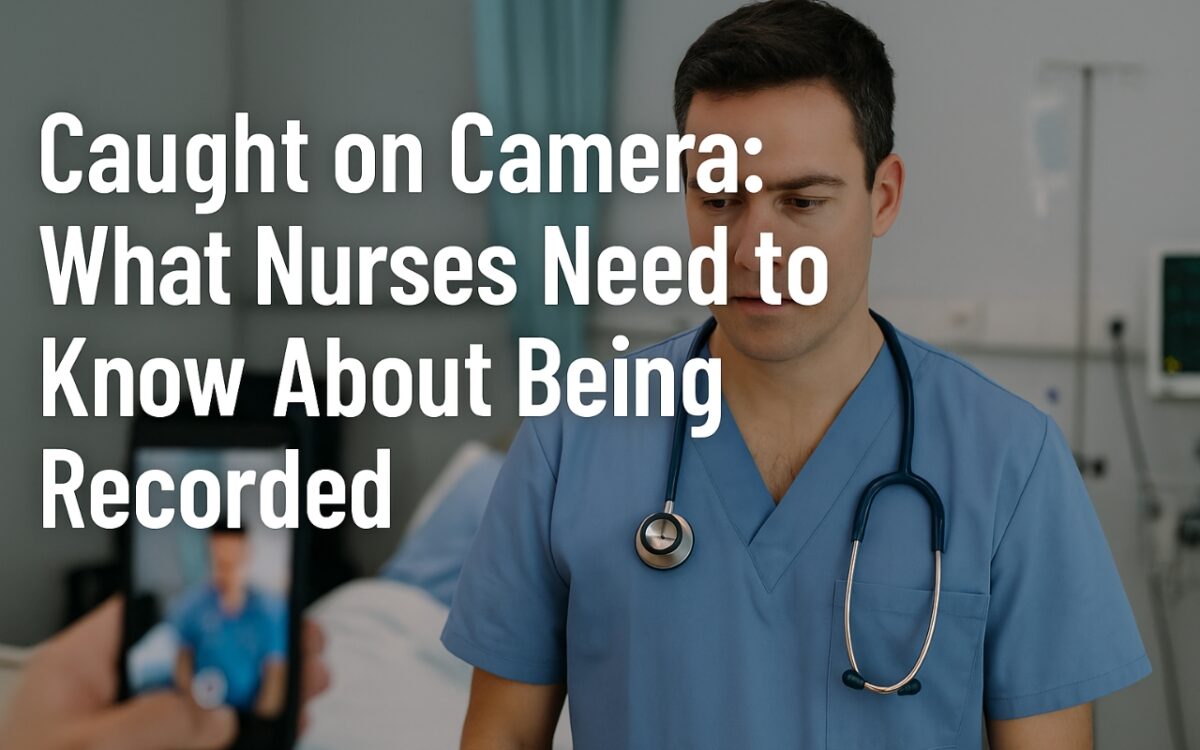
A nurse accidentally discovers a recording of himself giving patient care that has been posted on the Facebook page of a patient’s family member. Another nurse receives a notice that a State Board of Nursing complaint has been filed against her for making disparaging comments about a patient without knowing that the patient was recording her on his cellphone.
As smartphones and social media have become ubiquitous, the number of recordings posted online has grown exponentially. Most nurses are now aware of the dangers of posting patient-related content online, but what happens when the roles are reversed and a patient or their family member posts videos, photos, or content about the nurse? What rights does the nurse have? And what happens when a voice-control device captures a nurse’s inappropriate comment? Is the nurse at risk?
Understanding the issues surrounding a patient’s recording can help you avoid possible damage to your career and emotional health.
Ubiquitous Recording
Recordings are occurring in a wide variety of settings. Patients and families may record care in hospitals, long-term care and assisted living facilities, and at home. Patients or families may record for several reasons, including:
- To aid in recalling medical information: It can be challenging to remember all the details shared during a healthcare encounter.
- To share information with family or other caregivers, especially in complex medical situations.
- To document the quality of care, this may be used as evidence in cases of suspected negligence or malpractice.
Requirements associated with the law may include obtaining consent from the patient’s roommate, posting a sign indicating that recording is in progress, and holding the resident responsible for the costs of camera equipment.
In the home, voice-control or “smart speaker” devices, such as the Amazon Echo or Google Home, may not only remind patients to take their medication but also record what people in the room are saying.
Additionally, home security camera systems such as Ring or Google Nest may be recording people as they arrive, leave, and move about the home.
Unfortunately, nurses may not be aware that they are being recorded. A survey of the general public in the UK found that 15% had secretly recorded a visit to a clinic office. The most common reason was to improve understanding of medical information and to share with family members.
In the U.S., these types of recordings may violate wiretapping laws. The federal wiretapping laws (18 U.S. Code § 2511) only require one party to agree to a recording; however, many states have “all-party” requirements, which mean that all parties must consent to the recording. Typically, a more restrictive state law would take precedence over federal law.
When Private Goes Public
When evidence of healthcare professionals behaving inappropriately goes public, it can result in significant professional harm, including possible legal action, for those involved. In 2015, for example, a patient used his phone to record post-discharge instructions for a colonoscopy. He neglected to turn off the recording and was later shocked to hear disparaging comments made by the surgeon during the procedure, while the patient was under anesthesia. The patient subsequently won a $500,000 lawsuit.
Failing to speak up when inappropriate behavior occurs does not protect you from legal action. For example, the anesthesiologist in a video created by a surgeon who was dancing during surgery has been named in a lawsuit.
In the Courts
The admissibility of recordings in court cases varies by jurisdiction, and legal parameters surrounding these issues are still being developed. It is also essential to be aware that federal and state legal thresholds may differ, which can impact court decisions.
Recordings may also impact the types and amount of damages awarded as a result of legal action because of the perception that what is said, or the tone of voice used, in the audio or video clip reveals a lack of “feeling” by the defendant. This perception can also be an issue when it comes to settlements. For example, if minor patient harm occurred but the nurse is recorded as making negative comments about the patient, there might be a push for a higher payment.
Self-protection
Nurses can take steps to protect themselves from the negative consequences of being recorded. (See Reducing recording risks.) Keep in mind that Provision 5 of the American Nurses Association Code of Ethics for Nurses with Interpretive Statements notes that “…the same duties we owe to others we owe to ourselves.” You should expect patients and families to respect your privacy in the same way you respect theirs.
Setting boundaries related to recording is a reasonable step to take. This, combined with refraining from making inappropriate comments or taking actions that could be detected by recording devices, will help you avoid litigation while providing quality care.
Reducing Recording Risks
Both organizations and individual nurses can take steps to help avoid legal action stemming from recordings made by patients and families.
Organizations
- Establish policies regarding the use of cell phones, tablets, and other recording devices by patients and families.
- Educate staff and volunteers about photo and video rules and policies.
- Post notifications for patients and families to inform them that they should restrict the use of cell phones and other devices capable of recording.
- Provide patients and their families with written information about the organization’s policies related to recording.
Nurses
- Survey the room before delivering care. Note if any cell phones, tablets, or voice-activated devices are present.
- Politely inquire about their reasons for recording and express any concerns you might have.
- Consult with supervisors or legal counsel if you are unsure how to proceed or believe the recording violates policies or laws. Seek guidance from your charge nurse, supervisor, or legal team.
- Maintain professionalism: Regardless of whether you are being recorded, strive to remain calm, professional, and empathetic in all interactions with patients and their families.
- Do not pose for photos with patients or patient family members; these photos could end up on social media. If a family member is making a recording of patient care, ask them to stop, explaining that they are violating the patient’s right to privacy under the Health Insurance Portability and Accountability Act.
- Report inappropriate social media posts about you. If you see such a post, take a screenshot or record the posting (for evidence in any potential court case) and report the posting to the social media outlet.
- If you become involved in a lawsuit related to a recording showing you engaged in inappropriate behavior, be honest with your insurer and attorney about the entire scope of the recording. For example, just because only part of a video was posted online doesn’t mean that additional footage won’t appear during a court case.
- Keep in mind that good communication helps reassure patients and families that quality care is being delivered, removing the motivation to record to ensure the patient is receiving excellent care.
This article is provided for general informational purposes only and is not intended to provide individualized advice.

- She Treats Addiction Through a Screen. Here’s What This Psychiatric NP Is Watching For - September 30, 2026
- She Went From Broadway to Dementia Care. Now She Helps Nurses Understand What Behavior Is Saying - September 25, 2026
- What Causes Breast Milk Supply to Drop? What Nurses Should Know - August 18, 2026