
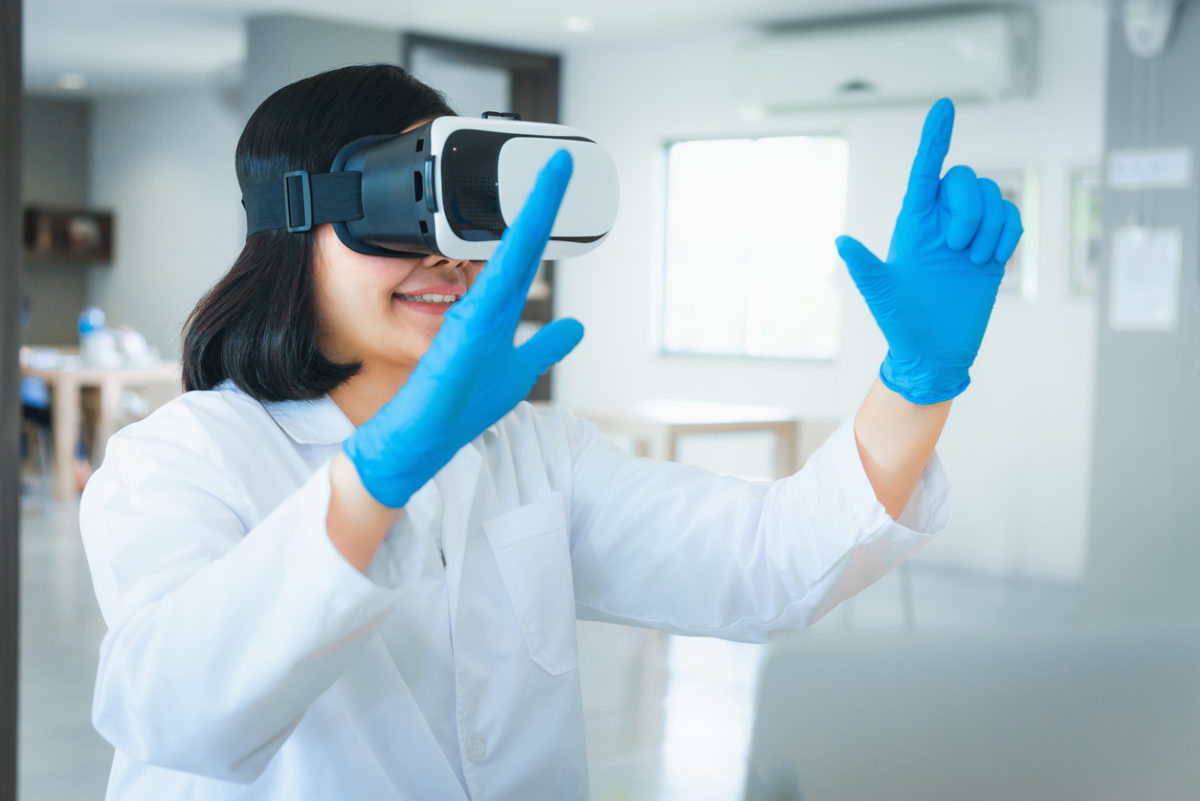
As the COVID-19 pandemic swept through the country and universities shifted to online learning, nursing programs needed a new way of providing clinical experiences to students. Taking a cue from longtime online nursing programs like the RN to BSN, universities turned to technology for assistance.
What is a virtual simulation in nursing?
Throughout the years, traditional nursing programs have utilized in-person clinical simulations, which place students in a real-to-life learning experience using interactive mannequins or standardized patients (actors who portray patients), with many variations in between. However, the pandemic changed all of that and nursing programs came to rely on virtual reality simulations in place of their regular clinical simulations to provide meaningful educational opportunities.
Virtual simulations are valuable educational tools that not only provide nurses with practical experiences in a safe environment – they also allow students to effectively apply critical thinking skills and theoretical nursing care principles to better prepare them for a career in a real-world, acute care clinical setting.
Taking a cue from 100% Online RN to BSN programs
Online programs like Ohio University’s RN to BSN program have been using virtual patient platforms such as Shadow Health for years with great success. Shadow Health is included in two of the nine nursing classes required for the OHIO program.
These RN to BSN simulations allow online learners to participate in lifelike, conversational interactions with a wide variety of virtual patients. Learners advance their clinical and communication skills by interviewing, examining and treating virtual patients. According to Dr. Sherleena Buchman, assistant professor in OHIO’s College of Health Sciences and Professions School of Nursing, a variety of technologies can be used for virtual experiences.
VR simulations or vSim in nursing courses
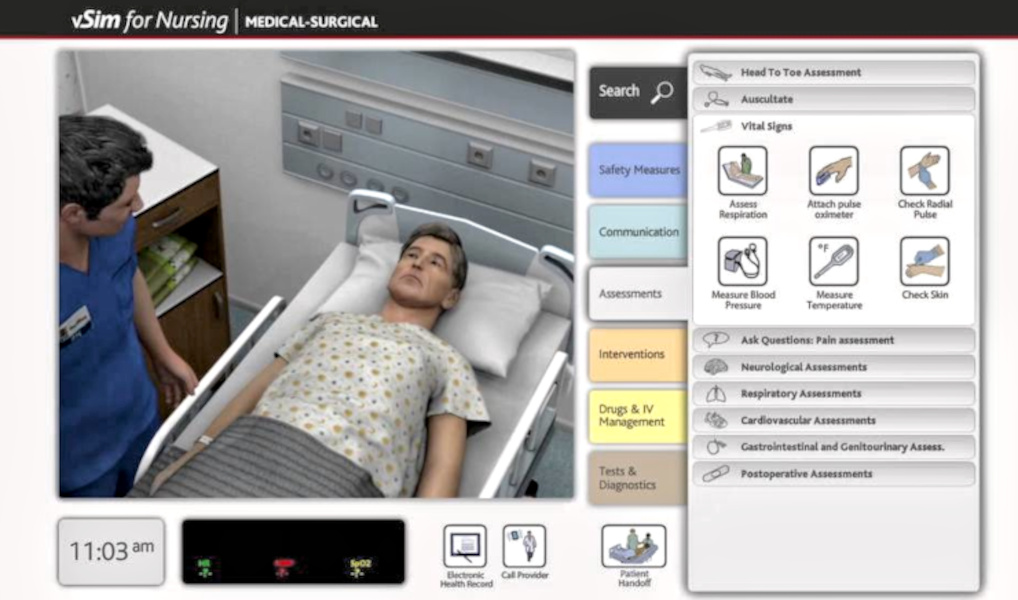 Often universities have clinical simulation programs built directly into their nursing curriculum. Virtual simulations in nursing (vSim) is a platform that more universities embraced during the pandemic to helps to build clinical judgement skills through a realistic virtual environment, according to Dr. Buchman.
Cine-VR, a virtual reality 360 video simulation experience that uses the same principles of clinical simulation is a popular nursing tool. This way, students are able to see and hear a person in need, rather than using a mannequin.
“One example is the administration of NARCAN to a college student who has overdosed in a dorm setting,” said Dr. Buchman. “The learners are immersed in the virtual dorm room, which is viewed through virtual reality goggles, and are able to turn a full 360 degrees and see what is going on all around them. Additional Cine-VR simulations include two other opioid-related scenarios and a three-part experience related to providing care to a patient with Parkinson’s Disease.”
Why is simulation important in nursing?
Simulation is important to nursing because it provides the needed safe learning environment for students. “They are able to ask questions, make mistakes and learn from them without causing harm to a patient,” Dr. Buchman highlights.
“There are many opportunities for virtual and augmented realities to be utilized in nursing education. Our profession as a whole is just beginning to understand the potential for this type of learning,” Dr. Buchman explained. “vSim helps learners to develop confidence in their knowledge, skills and the attitudes of their profession, which is extremely important in the field of nursing.”
Nursing simulated electronic health records (EHR)
A critical part of simulations are electronic health records. Nursing students earning their BSN degree online or in-person can expect to not only learn about electronic health records, but to put that into practice. Nurses must document everything they do on a daily basis.
“There is a famous saying in nursing, ‘If it was not documented then it did not happen.’ As vSim and Cine-VR are realistic nursing scenarios, it is important that learners develop the skills of charting and understanding the electronic health record,” Buchman said.
What to expect from a BSN curriculum
Course requirements for BSN students, whether online or on-campus, are guided by the National Council of State Boards of Nursing, Quality Safety, Education in Nursing, and are built around the American Academy of Colleges of Nursing’s nine BSN Essentials. Ohio University’s RN to BSN degree is designed for working adults and offers 100% online coursework, 5-week sessions, and affordable tuition at less than $7,600 for the program’s nine required nursing courses.
Interested in learning more about an online RN to BSN degree? Visit ohio.edu/rn-to-bsn.

- How Digital Exam Prep Tools Are Improving Nursing Certification Success - May 14, 2026
- Heartwarming Holiday Gifts Nurses Will Love - November 24, 2023
- Mentoring the Next Generation of Black Nurse Researchers - June 16, 2022