
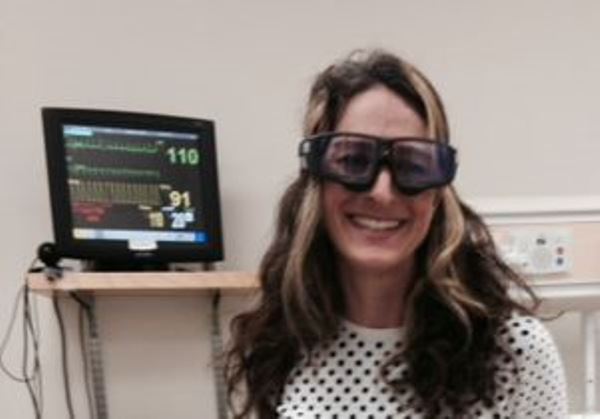
A new study from the UCLA School of Nursing shows that eye-tracking technology could improve nursing education by reducing the role of subjective assessments, providing more consistent evaluations. Eye-tracking technology has been used for testing and training airline pilots, and the UCLA researchers decided to test whether it could be used to determine differences in task completion between novice and expert nurses during simulation training.
Expert nurses are intensive care or emergency department nurses who have five or more years of experience. Novice nurses are senior undergraduate nursing students. With over 400,000 deaths per year in hospitals from preventable causes, patient safety relies on training competent practitioners. Educators currently use primarily subjective assessments which provide inconsistent results in determining competency, but research on eye-tracking technology shows that it might be the answer to consistent evaluations of nursing clinical performance.
[et_bloom_inline optin_id=”optin_13″]
Eye-tracking involves the use of glasses with sensor technology and an imbedded video camera to track the movements of a person’s pupil to tell where their eyes are focused. The glasses observe and record eye behavior including pupil dilation and where the wearer is focusing their attention. The eye-tracking technology was used in this study to compare performance response in seven basic nursing tasks which included placing a pulse oximeter on a finger, listening to lung sounds, and applying oxygen.
Data showed a noticeable different between how novice and experienced nurses processed information in a busy environment. Students were found to spend more significant amounts of time looking at data not relevant to a patient’s immediate problem while experts seemed to know what was important, allowing them to acquire pertinent information much more quickly. Director of simulation at UCLA School of Nursing says that expert nurses’ ability to quickly discern vital information and focus their attention on relevant areas is a powerful model for helping novice nurses gain situational awareness and refine their focus.
Results of the study also revealed an unexpected and valuable finding: the bird’s-eye view provided by the glasses allowed for a full view of the participant’s performance when administering medication into an intravenous line whereas ceiling-mounted cameras commonly used for nursing assessments are often obstructed when a student bends over the patient.
Research is still ongoing to test eye-tracking glasses as a useful assessment tool for simulation and clinical settings. However, embracing new technology adds to an educator’s tool box for ensuring safe practitioners and eye tracking can add to the education of novice nurses to teach them which areas are important to focus on in certain clinical settings and which are not.

- Nationwide Shortage of Sexual Assault Nurse Examiners Prompts Alternative Solutions from States - March 30, 2020
- Coldiron Senior Nurse Executive Fellowship Program Established to Enhance Development of Senior Nurse Executives - March 27, 2020
- Nurse of the Week: UW-Madison Nursing Student Marcela Hanson Crowdsources Childcare Help For Local Healthcare Workers During COVID-19 Pandemic - March 25, 2020