
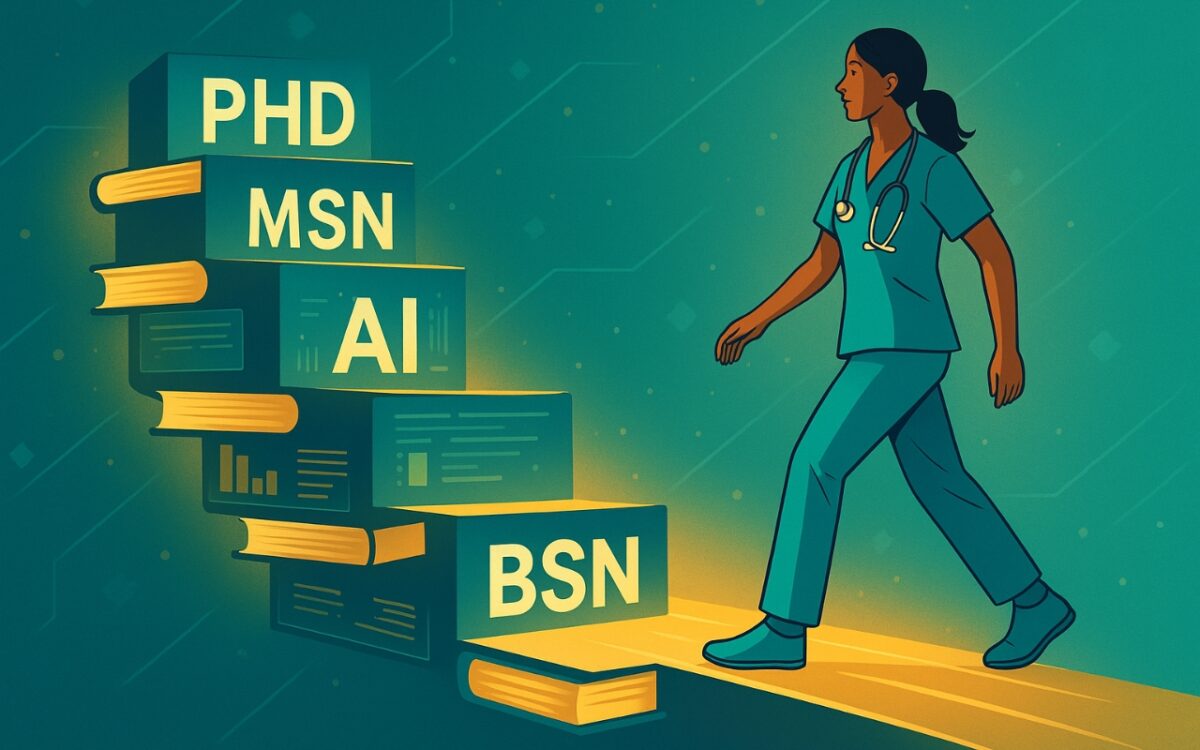
As the U.S. healthcare system faces an aging population and a worsening nursing shortage, the profession is at a crossroads. The challenge is not just about recruiting enough nurses but creating real opportunities for growth, leadership, innovation, and now AI-driven advancement once they enter the field.
According to Dr. Jing Wang, Dean of Florida State University’s College of Nursing, the solution lies in programs that elevate nurses beyond the bedside. “Too often, we are reactive—filling shortages at the bedside—without creating enough pathways for leadership, innovation, and lifelong learning,” she says. “This leaves nurses feeling stuck and contributes to burnout and attrition.”
Closing Gaps in Nursing Growth
Dr. Wang says that to keep nurses engaged and prepared for the future, institutions must reframe their approach to professional development. “We must invest in programs that treat nurses not only as caregivers, but also as drivers of knowledge, system improvement, and policy change,” she explains. By embedding nurses in technology development and expanding flexible academic pathways, she believes nurses can take an active role in shaping solutions rather than just responding to crises.
Preparing Nurses for a Changing Patient Population
The urgency of innovation is clear: by 2034, adults over 65 will outnumber children under 18. This shift means nurses will need advanced skills in geriatric and chronic disease management as well as emerging competencies in digital health.
“Nurses will need to interpret data, translate insights into action, and guide patients and families in their use,” Dr. Wang notes. She emphasizes that these skills will be especially critical in rural and underserved communities, where AI-enabled care, telehealth, and home-based monitoring can close gaps in access.
Nation’s First Master’s in AI in Nursing
FSU has taken a bold step with the launch of the nation’s first Master’s in AI in Nursing. Dr. Wang believes nurses must be central to the development and deployment of artificial intelligence.
“Nurses understand what truly happens in practice: how patients describe their symptoms, which interventions succeed in real-world settings, and how to triage rapidly changing information,” she says. “By embedding nurses at every stage—brainstorming, design, testing, and evaluation—we ensure AI tools are human-centered, clinically meaningful, and ultimately better for patient care.”
She also addresses a common misconception: that AI might compete with or replace nursing work. “AI can surface insights and reduce administrative burden, but it cannot replace human judgment, empathy, or contextual understanding. At FSU, we stress that AI is a partner in care, not a substitute.”
One practical example comes from chronic disease care. Dr. Wang explains that a nurse in a rural clinic trained in AI could use predictive analytics to spot subtle changes in heart failure patients—such as daily weight fluctuations—that signal hospitalization risk. “Instead of waiting for a crisis, the nurse intervenes early, preventing a costly and dangerous readmission,” she says.
Flexible Pathways to Leadership
Beyond AI, FSU is also addressing another pressing gap: the national shortage of PhD-prepared nursing faculty and researchers. To lower barriers, the university launched a fully asynchronous PhD program, allowing nurses to continue working while pursuing doctoral study.
“For many experienced nurses, the main barriers to doctoral study are limited time and the financial sacrifices required,” Dr. Wang explains. “Our high-quality, fully asynchronous PhD pathway removes that tradeoff. That flexibility attracts a broader, more diverse group of nurses into academia and research.”
She says that PhD-prepared nurses are essential to the profession’s future. “Without more doctorally prepared faculty, nursing schools cannot expand enrollment to meet workforce demand. Without more researchers, the profession cannot generate the evidence needed to improve care. PhD-prepared nurses are catalysts for change: they not only create solutions and advance knowledge, but also mentor the next generation.”
Lifelong Learning as a Core Value
Dr. Wang is clear that nursing schools must evolve into lifelong learning hubs. At FSU, initiatives include partnerships with organizations like the Coalition for Health AI (CHAI) to launch microcredential learning on responsible AI for all nurses.
“To truly strengthen the profession, nursing schools must be engines of lifelong learning, not just entry-level education,” she says. “This includes offering flexible continuing education, certificate programs, and advanced degrees that meet nurses where they are.”
Her advice to nurses looking to grow is simple: “Begin with curiosity and self-reflection. Ask yourself: what aspects of nursing give me the most energy? Where do I see problems that need solutions? Growth begins by following those instincts.”

- She Went From Broadway to Dementia Care. Now She Helps Nurses Understand What Behavior Is Saying - September 25, 2026
- What Causes Breast Milk Supply to Drop? What Nurses Should Know - August 18, 2026
- National Breastfeeding Month: How Nurses Can Help Families Make Informed Feeding Decisions - August 6, 2026