
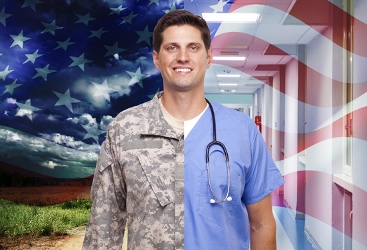
V-CARE was created by the federal government in 2013 to fund pilot programs at nine universities around the US to create Bachelor of Science in Nursing curriculums for veterans, medics, and corpsmen. Military medics and corpsman who are trained to save lives in combat and provide health care at home do not qualify for most civilian medical jobs. Veterans are also at a disadvantage against their competition when they apply for nursing school.
To start V-CARE, the US Department of Health & Human Services awarded $2.8 million to the 9 universities involved, with the intention of helping more than 1,000 veterans become nurses. One of the initial grants was awarded to the University of South Florida (USF), where College of Nursing associate dean Rita D’Aoust is happy to welcome medics and corpsmen, considering them a valuable pool of untapped talent who shouldn’t be allowed to go to waste. A nurse practitioner with a doctorate in teaching, D’Aoust took the lead in creating USF’s medic to nurse program.
With over 11,000 unemployed medics and corpsmen leaving the service in 2011, it was the perfect time to take advantage of the opportunity to provide education programs for these skilled and hardworking service men and women. Medics and corpsmen are trained to perform some of the same medical procedures in the military that Registered Nurses and Nurse Practitioners perform in civilian healthcare settings. However, their GPAs tend to be lower, putting veterans at a disadvantage to other students when competing for acceptance to nursing programs. But at V-CARE programs like USF’s, there is recognition that veterans have more to offer than GPA.
The V-CARE program at USF is unique because they give credit to veterans for their previous experience. USF awards up to 16 credits for military medical experience, and allows V-CARE students to skip some introductory classes.
In designing the 16-month program at USF, D’Aoust based her program off of other similar programs and focus groups of veterans, educators, and “veteran friendly” universities. She also enlisted the help of Janet Davis, senior vice president and chief of nursing at Tampa General Hospital (TGH). With Davis’s help, V-CARE students can now do their clinical training at TGH, a perfect match for the level one hospital that handles trauma patients.
TGH is a real value to USF’s V-CARE Program. The hospital recognizes that the veterans coming out of this program are hard-working individuals who have been trained to deal with stress, crisis, and keeping things calm. TGH even hired one of the first 10 veterans to graduate from USF’s V-CARE program in December.
So far, the program is really paying off. USF’s first V-CARE class of 10 had a 100 percent graduation rate, and their second class of 23 is on track to do the same this coming December. USF has started a national webinar to share their V-CARE ideas and consult with other colleges and universities who want to start their own medic to nurse programs.

- Nationwide Shortage of Sexual Assault Nurse Examiners Prompts Alternative Solutions from States - March 30, 2020
- Coldiron Senior Nurse Executive Fellowship Program Established to Enhance Development of Senior Nurse Executives - March 27, 2020
- Nurse of the Week: UW-Madison Nursing Student Marcela Hanson Crowdsources Childcare Help For Local Healthcare Workers During COVID-19 Pandemic - March 25, 2020