
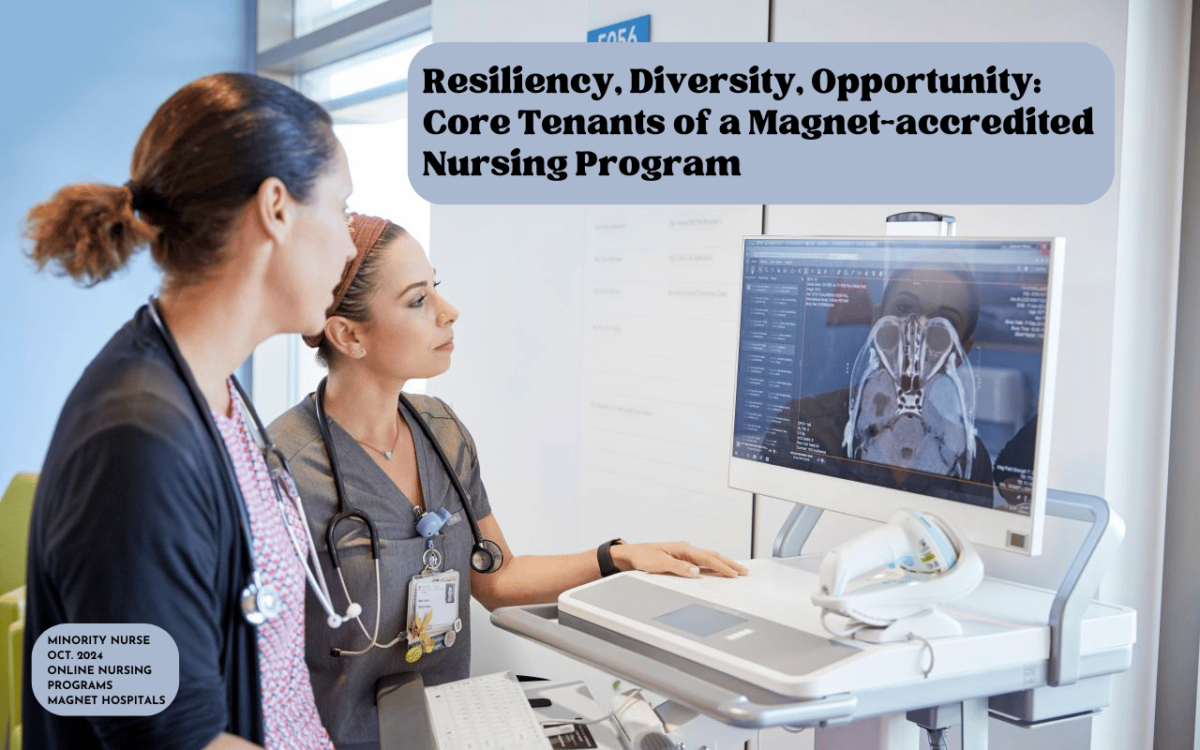
In 2024, Stanford Medicine Children’s Health was proudly again awarded Magnet designation. While this was not the first time the hospital had been recognized for its journey to nursing excellence, the continued recognition shows that the organization is taking positive steps to ensure the best nursing practices and the best possible patient outcomes.
While every hospital’s nursing program is unique, designations like these represent a commitment to nursing excellence. A commitment to growth. A commitment to be better tomorrow.
Nursing is a profession filled with life-long learning. As one of my colleagues said in a recent interview with Daily Nurse, learning is a basic tenant of nursing. We constantly learn new things, gain professional knowledge, and apply this education to improve outcomes.
Building and leading nursing practices is no different. Magnet recognition is an important designation that validates nursing contributions and commitment to providing quality patient care through innovation.
Here are a few best practices and thoughts for nursing leaders aiming to bring a holistic, multidisciplinary approach to nursing with a continued investment in the practice.
Bolster Resilience and Decompression for Transformational Change
Nursing is both incredibly rewarding and challenging at the same time. This equation hasn’t changed since my time by the bedside more than two decades ago. That said, nursing and nursing practices have evolved to prove very resilient. The facts bear this out.
According to reports, nurses show strong resilience; however, they can struggle with decompression. Resilience is at the heart of strong nursing and nursing leadership. The industry deals with high levels of emotion, stress, and fatigue. As a result, nurses must have time to decompress and be prepared to perform their best. With it, optimal care practices and improved patient outcomes are possible.
There are a few ways this can be exhibited:
- Appointment of “wellness” positions: A theme with progressing as a nursing practice and an organization is being deliberate about what you say and do. Without this approach, there is no focus or commitment to following through. The same applies to an organization’s journey to build an environment conducive to nursing wellness. Organizations with the capacity should advocate for and hire positions whose focus and intent are directly tied to wellness. Examples of these positions as a part of our journey are the Director of Resiliency and Wellness and the Resilience Education Program Manager. This keeps wellness at the forefront of leaders’ minds and gives them the time and space to focus specifically on supporting nurses.
- Carve out time for extracurricular activities and programs: In a fast-paced environment, blocking time for activities that don’t directly impact patient outcomes can be hard. It’s an investment required by the organization and every one the program serves. Nurses have shown a willingness to capitalize on these opportunities and participate in activities that benefit their health and wellness. Examples that help nurses find their center include wellness retreats, resilience assessments, and other stress-alleviating sessions, such as “moments of calm,” in which nurses are given space (individually or with their peers) away from the job.
- Advocate for nursing involvement in technology decision-making: Nurses and nursing leaders know that technology integration has been the center of many organizational conversations over the past three to five years. The problem? When nurses aren’t involved in technology decision-making, chances are that it risks being ineffective (or not as effective as it could be) when put into practice. Nursing leaders must advocate for nurses to have a seat at the table, and organizations must trust the individuals and teams who use technology by the bedside every day. For example, nurses should be made aware of the application of artificial intelligence (AI). Trials are going on looking at how AI can support documentation at the bedside. However, without the perspectives of those who use the tools the most, organizations risk the tools adding stress and complication versus giving nurses back time in their day and promoting ease.
Nursing leaders must be intentional about helping nurses and nursing staff boost resilience. Efforts that aren’t intentional will have a short shelf life. They will succumb to the pressures and rigors of daily work.
Nursing Leadership and DEI (Diversity, Equity, and Inclusion) Begin at the Schooling, Education, and Recruitment Levels
While nursing leaders must maintain focus on the organization they are trying to build today, they must keep one eye on the future. According to the American Association of Colleges of Nursing (AACN), a few sobering statistics firmly etch recruiting and talent atop nursing leadership’s priorities.
Data shows that the median age of registered nurses is approximately 46, with more than 25 percent planning to leave the industry or retire over the next five years. Furthermore, it is projected that over 200,000 nursing jobs will be created annually through 2030. Finally, there is a growing demand for nursing and nursing-related roles due to advancements in preventative care and increasing rates of chronic health conditions.
This shows gaps not only in future nursing positions but also in changing the guard as our industries’ tenured workers exit for a well-earned rest. A critical part of filling this gap and improving patient outcomes is becoming more diverse.
Good newsthe industry has recently taken leaps towards this goal. I am proof of that: a male, Hispanic nursing leader. Statistics show that nurses are becoming more diverse. According to an HRSA survey, non-Hispanic Black and non-Hispanic Asian RNs now constitute 11 percent and 9 percent of the nursing workforce, up three and four percentage points, respectively. Furthermore, male registered nurses now comprise a larger percentage of the workforce, up to 12 percent. But there is plenty more work to be done.
- Prioritizing recruiting strategies regionally and nationally: Building the workforce an organization needs through a DEI lens will mean broadening recruiting efforts. Diverse hiring at the bedside will be required to meet an increasingly diverse patient pool, such as those from Hispanic, Latinx, and Black communities. This isn’t a quick flip of the switch, but in today’s “hybrid” work world, nursing leaders must work closely with their organizations to identify ways to broaden the candidate pool beyond local appointments. This can be through “remote” appointments for positions that don’t require frequent bedside attention. It can also offer relocation bonuses or support for nurses and nursing leaders looking to relocate or stay at an academic-affiliated health center while studying or advancing education.
- Build a culture that fosters curiosity: Remembering that nursing is a lifelong learning journey, organizations need to give nurses avenues to continue their education and hone their skills. Building a culture of curiosity and inquiry promotes the pursuit of new knowledge and innovation. Again, as is a familiar guidepost, these efforts must be intentional. There are strategic plans and programs that nursing leaders can put in place to build a lane for nurses to flex their curiosity. For example, a professional nurse development plan recognizes and rewards nurses who strive for excellence in delivering the highest quality of patient care while demonstrating commitment to nursing.
- Focus on improving outcomes based on research: The healthcare industry is trained to engage in data-based care practices. It must be a part of everything leaders do. For example, emphasize the development of elevated patient care standards rooted in research and evidence-based practices. One way is through councils, such as Research and Evidence-Based Practice (REBP) or Nursing Shared Governance Councils. These programs use research, science, and clinical care standards to position nurses of all backgrounds to impact the patients they serve positively. The journey to holistic care and building a nursing staff representative of the patient population also allows nurses to bring their unique selves to the bedside without fear.
It is important to select the best clinical care and have diversity in background. Nursing leaders have been preaching the importance of holistic care for decades. To achieve it, the staff must mirror the people that the industry serves.
Succession Planning Extends Beyond Bedside Care
In my multi-decade career in nursing and healthcare leadership, I have engaged with hundreds (if not thousands) of nurses. I have found the following to be true: every individual nurse has a unique career path and different motivators that inspire them most. Nursing leaders must embrace this individualism and empower nurses to position themselves for success today, tomorrow, and every day. This could be bedside, clinical research, education, care coordination, or a position waiting around the corner.
As discussed earlier, recruiting and hiring outside the organization is critical and, in many cases, helps meet the shifting demographics of the patient population. However, nursing leaders must also look internally for growth opportunities. These individuals know the organization and are steeped in its best practices. As a bonus, advancement opportunities are attractive for current and future hires.
We know we are lucky at Stanford to have access to and the means to put this into practice. However, every organization has the potential to do so in some shape or form. In meeting with fellow nursing leaders over the past few years, identifying ways to promote from within has been front and center of conversations.
Here are a few considerations:
- Search for candidates within the clinical nursing pool: Look internally for growth opportunities. From experience, this has been considered a pillar of Magnet excellence and shows a continued investment in an organization’s nursing staff. To provide context, about 70% of current nursing leaders were initially clinical nurses before being internally promoted. Positions include Nurse Educator, Assistant Patient Care Manager, and Patient Care Manager. It shows organizations are willing to invest in their people and reward them with opportunities.
- Identify opportunities for interim roles: When it comes to succession planning or advancing nurses and nursing leaders, it’s not always a matter of diving into the deep end. The industry is changing so much that interim opportunities benefit the organization and staff and give a great chance to get a feel for what skill sets each nurse has (or is interested in acquiring). It can also provide nurses with an intentional pause from their current role or energize them with the opportunity to take on something new. Half of our hospital’s current nursing leadership have had the chance to take on an interim role during their tenure. For many, it clarified a career path or path to leadership. For others, it reinforced a love for their current role while giving them new skills to advance the practice.
- Turn to formalized programs through partnership: The healthcare industry is no stranger to partnerships and working together to achieve a common good. Nursing development is no different. The proper infrastructure must be in place. Hospitals should look for alliances that allow nurses to participate in programs or leadership courses or engage in fellowships or internships. For example, partnering with local academic hospitals to offer curricula or courses focused on leadership advancement. Or they are partnering with leadership institutes to carve out intentional personal and professional growth time.
Don’t forget. Nursing leaders must ask nurses for feedback on the effectiveness of succession planning initiatives. Without it, you cannot evolve the program over time.
Reminder: It’s Okay to be Uncomfortable
Get outside your comfort zone to get the most out of nursing staff and establish a resilient, successful, and diverse practice. Not everything discussed is easy, but the rewards are valuable for nurses, nursing leadership, and care teams.
Here’s an example: There was a nurse I worked with for an interim opportunity. They were a little fearful that they didn’t have the skill set to take on this task. It was undoubtedly a new domain, but I had seen enough to know that they could thrive in that role. There were multiple conversations where we talked through scenarios and expectations, and we even quelled fears about elements of the job. This nurse took a leap of faith just as I had trusted them. The result was increased volume, a renewed sense of self, and personal leadership growth.
Moral of the story. Without discomfort, growth risks falling by the wayside.
Every organization is slightly different, as is every nursing staff and every patient population.
Ultimately, the goal is to create the best workplace that delivers the best possible patient outcomes.
This is what matters to us as nurses and nursing leaders.
And, most importantly, it matters to our patients.
It’s a long journey, but one that we’re well on our way to achieving.
Thank you to all the nurses and nursing leaders around the nation.
Together, there is work to be done.
