
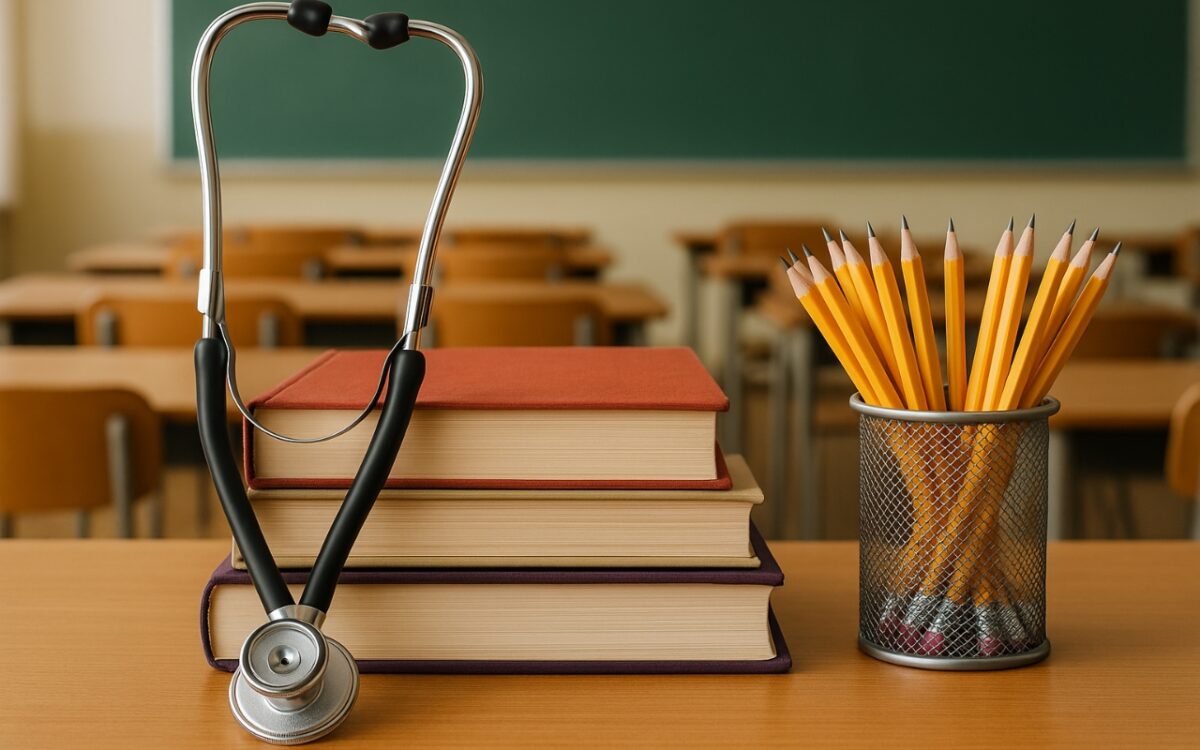
As kids head back to the classroom, school nurses are bracing for a fresh wave of scraped knees, inhaler refills, and anxious parents. However, the real impact of school nursing goes far beyond ice packs and Band-Aids.
When I stepped out of critical care nursing and into an Ohio public school, I found new ways to support my community’s health. That move changed the course of my nursing career and taught me skills that became the foundation for the nursing innovation work I do today.
From Emergency Response to Everyday Prevention
Hospital nursing is built on treating what is wrong right now. School nursing flips that script. In addition to being a hands-on care provider, you also become a public health educator embedded in a community of children aged 5 to 18—your priority shifts to prevention, wellness, and empowerment.
In a school setting, nearly every encounter becomes a teaching opportunity. A student who doesn’t want to take part in gym class may learn about the benefits of play and exercise. When a stomach virus sweeps through the building, the nurse teaches proper handwashing techniques and tracks absentee rates. For many students, the nurse’s office is also a safe space to talk about anxiety or bullying, an increasingly critical form of mental health first aid.
Creativity is mandatory for school nurses. Funding restrictions at my school meant I couldn’t formally teach in the classroom, so I looked for ways to weave wellness messages into the school day.
One year, I armed myself with a camera and asked every teacher, “How do you like your milk?” Their answers and milk-mustached portraits filled a “Got Milk?” bulletin board, sparking lighthearted hallway debates over milk flavors and turning an abstract lesson on nutrition and bone health into something tangible and fun.
I also worked with the PTO to install hand-sanitizer stations in every classroom and created a display that explained asthma in kid-friendly language.
Working in this environment sharpened my skills in assessment, behavior change, and collaboration, and taught me to solve problems with limited resources while adapting health messages for different audiences.
Why School Nursing Matters More Than We Think
According to the National Center for Education Statistics, there are more than 98,000 school nurses across the U.S. with early clinical exposure to population health. These nurses often become nurse educators, administrators, or policy advocates, carrying forward the skills they first developed in school hallways.
The wellness expertise developed in K-12 settings is increasingly valuable as healthcare shifts toward prevention and chronic-disease management. From public health education to monitoring chronic conditions, school nurses practice the kind of community-based care that is now in demand in clinics, telehealth, and policy work.
Perhaps most importantly, managing the health of hundreds of students and faculty builds rapid decision-making and independent practice. These are the same traits that employers prize in nurse managers, faculty, and innovators, which are cultivated every day in the school nurse’s office.
The Unexpected Launchpad
Becoming a school nurse reshaped my career in ways I never could have imagined. It inspired me to earn a master’s degree, then a PhD, and ultimately discover my passion for curriculum development.
The questions I ask while building courses are the same ones I once asked in the school hallway:
What does this learner need right now?
How can I deliver that content in the most engaging, practical way?
How can I ensure the lesson sticks?
Today, I lead Nightingale Innovations, where we design competency-based curricula and simulation resources to help bridge the gap between theory and practice for nursing students nationwide. The skills I learned as a school nurse now guide me in preparing a nursing workforce that is relevantly skilled, readily available, and representative of the communities they serve.
As the school year begins, I hope more people see the clinic down the hall, not just a place for ice packs and inhalers, but a launchpad for future nurse leaders and innovators.

- School Nursing: The Overlooked Career Catalyst - September 2, 2025